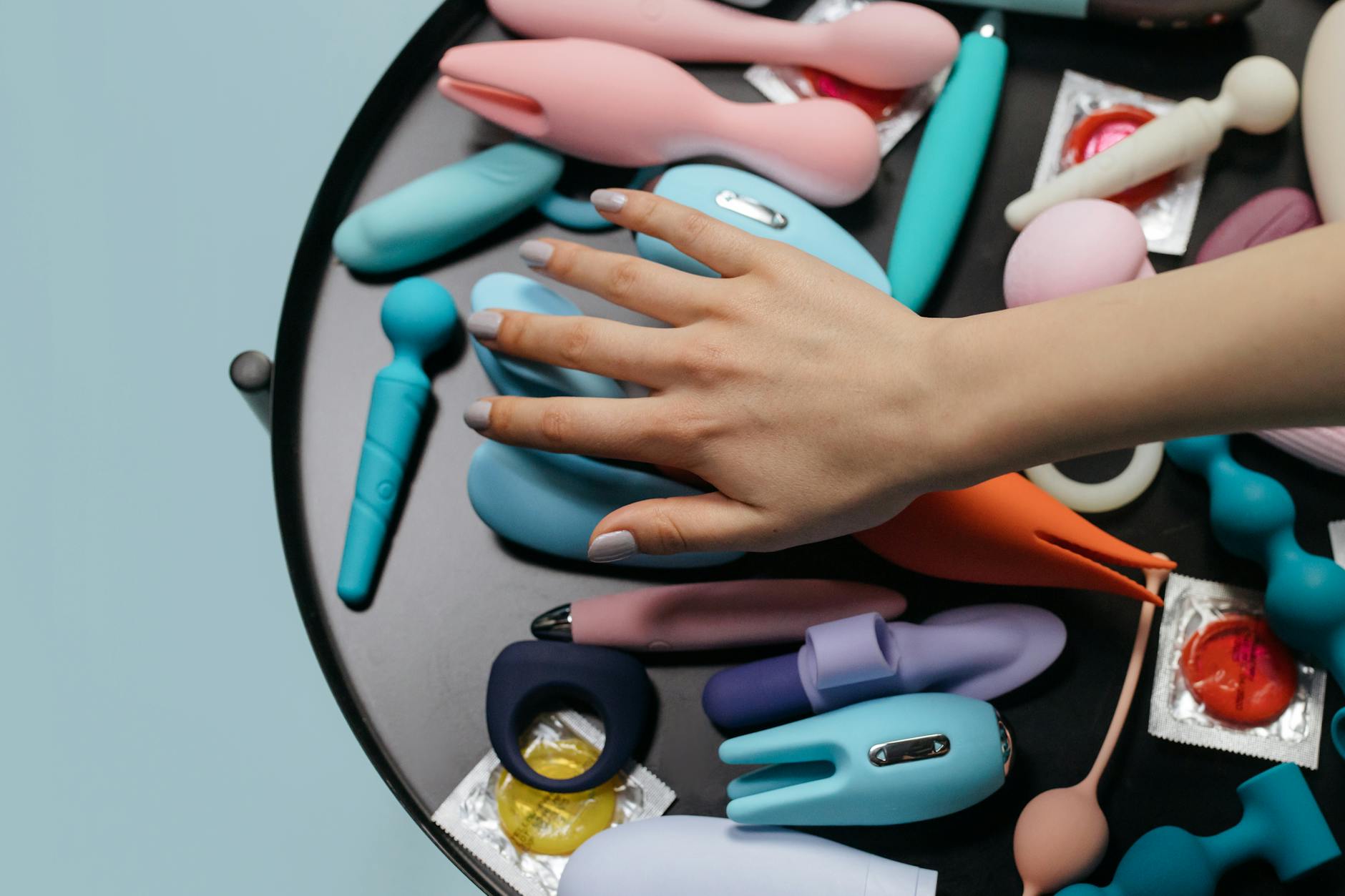
Let's talk about the timing trap
There's a myth that you're supposed to establish rock-solid sexual chemistry before introducing toys. You're not. Toys aren't a band-aid for bad sex. They're also not something to hide until you've "proven yourself." The truth is messier and better. Early-stage relationships are actually the easiest time to introduce lemon clitoral vibrators because there's less baggage, fewer routines to break, and more permission to experiment together.
What tends to go sideways is HOW the conversation happens. Most people either say nothing until the moment feels forced, or they lead with apology. "I like toys" gets delivered like a confession. That energy travels, and suddenly your partner feels defensive about something that should just be... fun.
Why a new relationship is actually the right moment
Here's what changes between introducing a toy at month two versus month two years. Early on, neither of you has a rigid idea of what sex "should" be. You're both still figuring out what works. The Lem or any lemon clitoral vibrator entering the picture reads as "we're exploring together," not "our old way wasn't good enough."
Second, early chemistry is forgiving. You're already attracted, already curious. A vibrator doesn't threaten that. What threatens it is secrecy or shame around the vibrator. Transparency reads as confidence. Confidence is sexy.
Third, you avoid years of awkward silence. People who wait five years to mention toys often find their partner has feelings about it that calcify over time. Introduce it early, and you're just setting a baseline. This is who I am. This is what feels good. I want you here for it.
The conversation that actually works
Forget the formal sit-down. The best introductions happen in the moment or in low-stakes contexts. You're texting. You're driving. You're in bed but not having sex yet. The opener matters less than the tone.
Here are three real openers that work:
"I've got this toy I really love. Want to try it together sometime?" Casual, curious, no pressure. The "together" part signals this is collaborative, not a solo thing you do instead of them.
"I'm way more likely to come if I use this." Fact, not apology. You're not saying the current setup is bad. You're saying your body works better with this tool. Most people respect that immediately because it's about optimizing YOUR experience, not criticizing theirs.
"Fair warning: I really like clitoral vibrators. The sensation is just different for me. Want to see what I'm into?" Framed as preference and excitement, not requirement or rejection of what you already do.
Whatever opener you choose, the key is owning it without drama. You like lemon vibrators or clitoral vibrators in general. This isn't a big reveal. It's information they happen to be hearing.
What to expect, and what to normalize
Some partners will be immediately curious. Some will need a beat. Some will have opinions you didn't expect. The last group is worth examining.
If your partner responds with "You don't need that," or "Are you not satisfied with me?," that's not really about the vibrator. That's anxiety about adequacy. <a href="/blog/how-to-use-lemon-vibrators-when-communication-feels-risky-with-your-partner">When communication feels risky in a new relationship, it often helps to separate their feelings from your needs</a>. You can say: "This isn't about you. Lots of people come more easily with vibration. It's neurology, not rejection. I want you to be part of this." Then stop explaining. You've given the information. Repetition signals guilt.
If they're open but hesitant, ask what they actually worry about. "Will I feel less useful?" "Will you get bored of me?" "Will you only want that?" Those are real concerns and they're worth hearing. Then you get to answer them. No, vibrators don't replace partners. They add sensation. You get to come harder and faster, and we both get to enjoy that. That's better for both of us.
Your first time using it together
Don't make it ceremonial. Don't apologize before, during, or after. Don't over-explain what the Lem or other lemon clitoral vibrator does. Just use it like you would any other part of your body. Get it wet. Put it where it feels good. Move it. Come. The matter-of-factness is the whole trick.
If you're nervous, that nervousness is the only real obstacle. Once the toy is in play, most partners stop worrying because they're too busy noticing that you're having an obviously amazing time. Seeing your partner come hard is proof the toy was a good idea, and most people respond to that with genuine excitement.
One useful move: let them hold it sometimes. Not every time, but rotating who's in control of the vibrator creates a shared experience rather than a solo performance. You're together in this. You're discovering what works. <a href="/blog/how-to-use-lemon-vibrators-when-you-have-a-new-partner-and-want-to-introduce-toys-gradually">Introducing toys gradually, with take-turns moments, often feels less jarring</a> than bringing in a vibrator and using it the same way every time.
Why quality matters more in new relationships
If you're introducing a vibrator for the first time to someone, don't start with a cheap knockoff. A quality lemon clitoral vibrator like the Lem delivers consistent sensation, feels premium in your hand, and signals that you take this seriously. Cheap toys feel cheap. They rattle. They die mid-orgasm. They send the message "I grabbed this from a gas station," which undermines the whole conversation you just had.
A high-quality toy says: I thought about this. I respect my pleasure. I'm inviting you into something that matters to me. That's the energy you want.
The conversation after
Don't debrief like you're writing a clinical report. Do mention what felt good. "That was really hot." "I came so much faster." "I loved having you there for that." These aren't flowery statements. They're honest feedback that normalizes the experience and shows you weren't nervous.
If something felt off or uncomfortable for either of you, talk about it. But keep the tone collaborative. "Let's adjust the angle" or "Maybe we'll go slower next time" beats "that didn't work." You're troubleshooting together, not assigning blame.
Over time, using lemon vibrators or clitoral vibrators with a new partner becomes just another part of your sexual vocabulary. The big reveal fades. What remains is that you both know your pleasure matters, you communicate about it, and you're willing to explore together. That foundation is better than any amount of chemical early-stage lust.
When to bring toys into your routine
There's no rule. Some couples use vibrators every time they have sex. Some use them occasionally. Some save them for when you know you're tired or distracted and want a guarantee. The key is that it becomes normal, not special. The vibrator is part of your toolkit, like lube or pillows. You reach for it when it serves you.
One reality check: if introducing a toy creates ongoing tension in your relationship, that's information. It usually means there are bigger conversations waiting to happen about desire, expectations, or compatibility. A vibrator didn't cause those conversations. It just revealed that they were needed. <a href="/blog/how-to-use-lemon-vibrators-when-communication-feels-risky-with-your-partner">When communication already feels risky, introducing toys can highlight that risk</a>. That's not a reason to hide. It's a reason to get support, maybe from a therapist or coach who can help you both navigate what's underneath the resistance.
But in most cases, bringing a lemon clitoral vibrator or any quality vibrator into a new relationship is straightforward. It's information. It's pleasure. It's ownership of what your body needs. Your partner either respects that or they don't. And that answer tells you something important about whether you're compatible long-term.
FAQ
Should I tell a new partner about my vibrator before we're intimate?
Not necessarily before the first time, but soon after. You don't need to announce it from the dating app. You do need to mention it before you're actually about to use it. The organic moment is usually during foreplay or early in the relationship when sex is becoming more regular. Think days to weeks, not months. The longer you wait, the more it feels like you're hiding something.
What if my new partner gets offended or upset?
First, ask what specifically bothers them. Often the offense comes from feeling surprised or from their own insecurity, not from the toy itself. Listen to their actual concern, then decide if it's a reasonable ask or a boundary issue. If they say "don't use toys when I'm around," that's their boundary and you get to decide if you can live with it. If they say "I don't want you touching yourself" or "you're not allowed to explore," that's controlling, and you have bigger compatibility questions. Don't convince someone a toy is fine if they fundamentally reject it. Find someone who's genuinely open.
Is it weird to ask a new partner to use the vibrator on me?
Not at all. Actually, asking them to participate is often less weird than using it solo in front of them. When they're holding it or watching you with it, it becomes shared play rather than performance. Start with "Want to try using this?" and see what they say. Most people are more comfortable with toys when they're actively involved.
How do I know if they'll think I'm too experienced or "not innocent"?
You don't, and you shouldn't try to seem like a different person. If someone judges you for knowing what your body likes, that's their problem to work through. You deserve a partner who's excited that you're sexually literate. Hiding who you are doesn't build intimacy. It builds a relationship on false pretenses. State what you're into, see how they respond, and if they're not interested in growing together, they're not your person.
Can lemon vibrators actually improve my orgasms with a partner?
Yes. Many people orgasm faster, harder, or more reliably with clitoral vibration. That doesn't mean your partner was doing something wrong. It means your nervous system responds to specific types of stimulation. Adding that stimulation often improves the entire experience, and your partner gets to be part of that. Most partners find it genuinely hot to see their lover come that intensely. It's good for both of you.
What if I want to use a vibrator every single time we have sex?
That's fine. Some people do. Some partners love that because it means guaranteed satisfaction. Others want to alternate or keep some sessions vibrator-free. Have that conversation. There's no rule that says you can't use lemon clitoral vibrators regularly. What matters is that you're both on the same page about frequency and that you're not using it as an escape from actual intimacy. If you're avoiding eye contact or touch because you're focused on the toy, that's worth examining. If you're using it alongside other kinds of touch and connection, you're good.
The real outcome
Introducing a clitoral vibrator to a new partner early on sets a tone. You're communicating. You're owning your pleasure. You're inviting them into something real. Most people respond to that with curiosity and excitement, especially if you're confident about it. The vibrator is just the tool. The actual thing you're building is a relationship where both of you matter.