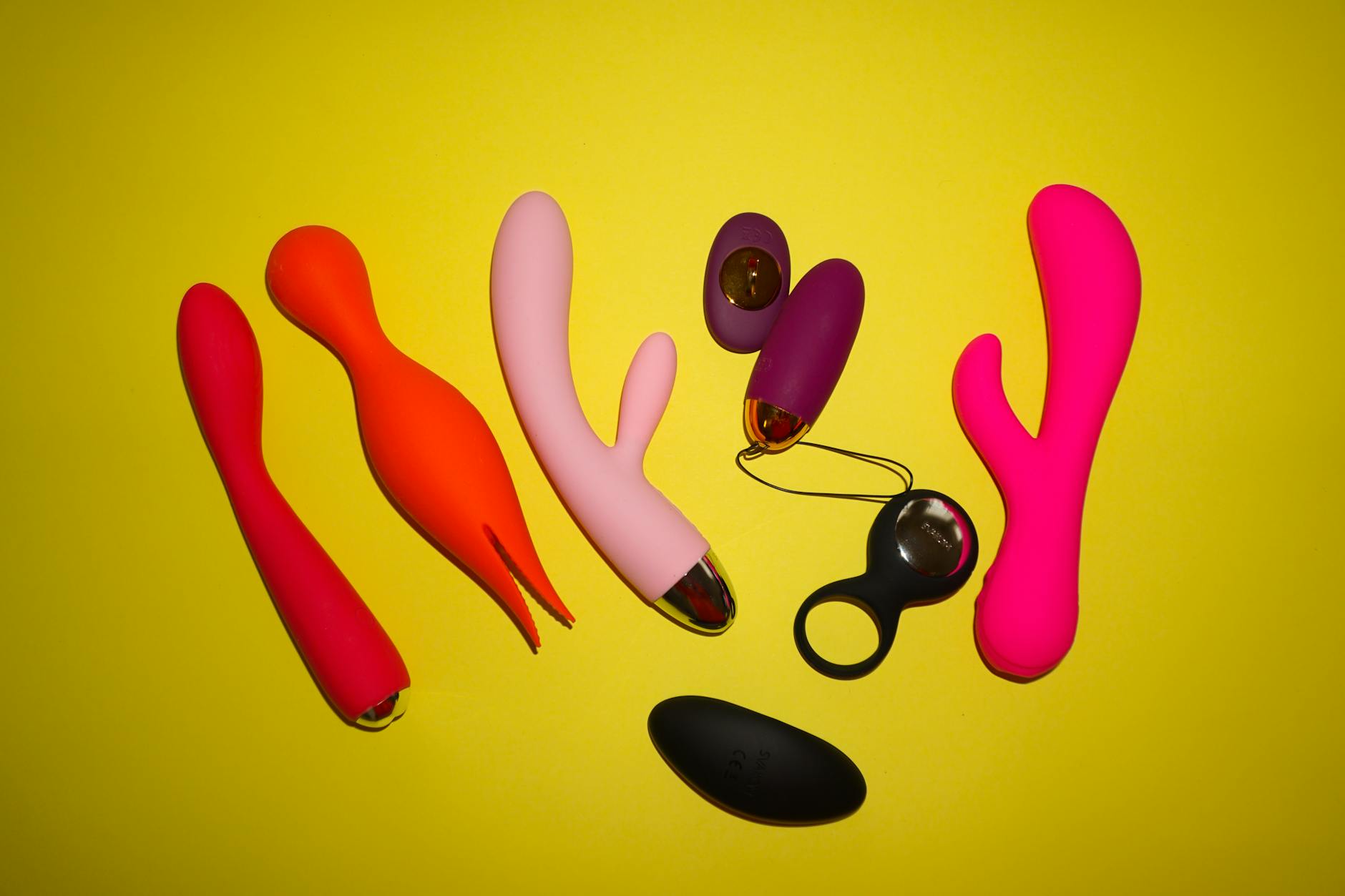
The midnight tiptoe is real
Let's be real. You share a bed with someone who wakes at every sound. You want to explore pleasure, but the vibrator feels like a mini chainsaw at 2 a.m., and you're lying there calculating whether an orgasm is worth your partner getting elbowed awake at 3.
It doesn't have to be this way. Quiet isn't a fantasy. It's a design choice, a technique, and a plan.
Why noise ruins everything
It's not the vibration itself. It's the mental tax. Your brain is halfway to arousal when you're already running a calculation: will they wake up? Should I stop? Is this worth it? That cognitive load kills arousal faster than anything physical could.
Your nervous system knows the difference between "alone and uninterrupted" and "alone but potentially interrupted." Even if your partner never wakes, your body senses the risk. Pleasure requires safety, and safety includes auditory privacy.
The secondary effect is relationship friction. A light sleeper woken by a vibrator at 3 a.m. isn't thinking "how nice." They're thinking about their morning meeting and resentment. You end up avoiding the toy entirely because the friction feels worse than the compromise.
Which lemon vibrators are quietest
Not all toys vibrate at the same decibel level. The quietest toys are typically those with smaller motors and suction-based stimulation, which produce vibration without the hum of traditional oscillation.
Air-suction devices like the Lemon Clit vibrators operate on pulse-and-release mechanics rather than continuous buzzing. They're naturally quieter because they're not vibrating at a consistent frequency. They feel more like a sensation and less like an appliance.
If you're between options, consider toy placement too. Toys that work against the clitoris directly (rather than inside the body) can be held more firmly against skin, which dampens transmitted vibration to the mattress. The difference between loose contact and firm contact can reduce perceived sound by 30-40%.
Toy material also matters. Silicone bodies muffle sound better than plastic or metal. If you're buying new, check product reviews for explicit "quiet" or "silent" mentions. Brand communities online (Reddit, Discord, toy forums) often rate toys by decibel level because they're real people solving this exact problem.
Positioning techniques that muffle sound
Where you hold the toy and how you position your body changes what the mattress transmits.
First, angle away from your partner. If they're sleeping to your left, position yourself on your right side with the toy held at an angle that directs vibration inward rather than into the mattress. Vibration travels through solid surfaces. If the toy is pressed directly into the bed, sound travels to the frame, then to the floor. If it's held against your body, most of that energy dissipates into your body instead.
Second, use pillows as acoustic barriers. Place a pillow between you and your partner. It's not dramatic soundproofing, but it absorbs frequency and reduces what travels across the bed. Some people use a pillow under their torso to tilt the toy angle further from the bed surface.
Third, press the toy firmly against your skin rather than holding it loosely. Loose contact means vibration radiates outward. Firm contact concentrates it. This also intensifies sensation for you, so it's a win on both fronts.
Fourth, consider the timing of your patterns. If your lemon clitoral vibrator has multiple settings, lower intensities are quieter. Start at a lower setting and build rather than jumping to maximum. You might find that patterns 1 through 3 are nearly silent, and you've been avoiding the toy thinking it's loud when it's actually the higher settings that create noise.
The timing conversation (the one you might be avoiding)
Honestly, part of this is not about soundproofing but about talking to your partner.
If you share a bed and you're avoiding self-pleasure because you don't want to wake them, your partner has inadvertently claimed ownership of your pleasure timing. That's worth addressing.
A conversation might sound like: "I'd like to explore pleasure more, and I'm worried about waking you. Can we talk about when that's realistic for us?" Some partners will say "honestly, I sleep hard, you're not waking me." Some will say "what if you tried it when I'm showering?" Some will say "I'm a light sleeper, let's set up so you have space to do this." Whatever the answer, you get data instead of assumptions.
Many couples with light sleepers find that self-pleasure during afternoon hours, before bed, or in another room entirely removes the guilt. You're not tiptoeing around someone's sleep if you're doing it when they're awake and occupied. That's not sneaking. That's taking care of yourself.
The other piece worth naming: wanting sexual autonomy in a relationship isn't selfish. It's actually healthy. You deserve to know your own body, your own pleasure, your own arousal patterns. A partner who resents that usually has something else going on. A therapist (or a real conversation) helps sort that out.
Practical setup for shared sleep spaces
If nighttime exploration is genuinely your only option, set yourself up for success.
First, invest in a white noise machine or fan. It masks incidental sounds and takes the pressure off you to be absolutely silent. Your partner might sleep better with ambient sound anyway. White noise is protective for both of you.
Second, use water-based lubricant. Dry friction is louder. Lubrication makes sensation smoother and quieter because there's less friction noise between toy and skin.
Third, build arousal first before you bring the toy in. If you spend 10 minutes on touch, breathing, or fantasy before the toy enters, your body is already responsive. A responsive body needs less intense stimulation to reach pleasure, which means lower settings and less noise.
Fourth, if your partner does wake up, have a plan. Most light sleepers who wake to a partner using a clitoral vibrator feel awkward or excluded rather than disturbed. Having a brief, matter-of-fact response ready ("just taking care of myself, go back to sleep") prevents awkward conversation. Some couples find this becomes an invitation to join. Some couples create a signal system. Whatever works for you is right.
Why silence is worth the effort
Pleasure without anxiety is qualitatively different. When your nervous system knows it's safe to be present, arousal builds differently. You're not braced for interruption. You can focus fully on sensation.
Quiet lemon vibrators and sound-conscious technique aren't about hiding. They're about protecting your own pleasure from the weight of someone else's sleep schedule. That's the difference. You're not being secretive. You're being intentional.
People also ask
Are lemon clitoral vibrators quieter than other vibrators?
Lemon vibrators, especially those using suction or pulse technology, tend to be quieter than traditional oscillating vibrators because they don't rely on continuous high-frequency buzzing. The design creates pleasure through sensation rather than vibration, which naturally reduces noise. Check product reviews or specifications for decibel ratings if quiet operation is essential for your situation.
Can I use a lemon vibrator under the covers without it being too loud?
Yes, but technique matters. Keep the toy pressed firmly against your skin rather than loose against the mattress. Use your pillow as a barrier between you and your partner. Keep it angled away from the bed surface so vibration travels into your body rather than the mattress. Most people find that lower intensity settings are nearly silent, so start there before assuming you need to go higher.
What's the quietest way to use a clitoral vibrator in a shared bed?
Combine several approaches: choose a suction-based toy, position yourself away from your partner, press the toy firmly against your skin, use pillows for acoustic dampening, apply lubrication to reduce friction noise, and keep the intensity lower. Building arousal with non-vibrator touch first means your body needs less intense stimulation. A white noise machine or fan helps mask any remaining sound.
Should I tell my partner I'm using a vibrator at night?
That depends on your relationship and communication patterns. Some couples find that openness strengthens intimacy and removes shame. Others prefer privacy without explanation. There's no universal right answer. What matters is that you're not carrying guilt about normal sexual self-care. If secrecy is causing you anxiety, a conversation (with your partner or a therapist) might help you figure out what's driving that.
Do all lemon vibrators have the same noise level?
No. Suction devices are quieter than buzzing motors. Silicone bodies muffle sound better than hard plastic. Lower intensity settings are quieter than higher ones. If quiet operation is essential, read reviews specifically mentioning sound level, or reach out to customer service with your concern. Many brands are designed with shared living spaces in mind.
Is there a vibrator that's completely silent?
Not completely, but some are remarkably close. Suction-based vibrators and lower-intensity settings come closest. The word "silent" in product marketing usually means "much quieter than standard vibrators," not literally soundless. Firm skin contact, lubrication, and proper positioning reduce perceived sound significantly. Test settings and angles to find your quietest configuration.
The real permission here
Your pleasure matters. It matters even when someone else is sleeping nearby. It matters even when it's inconvenient. It matters even when there's friction about it in your relationship.
You don't need to earn the right to explore your own body. You don't need to apologize for self-care. A quiet approach isn't about minimizing yourself. It's about protecting your pleasure from logistics and then living fully anyway.
If you're ready to explore, start with technique and positioning before you assume you need a different toy. You might surprise yourself with what's possible.