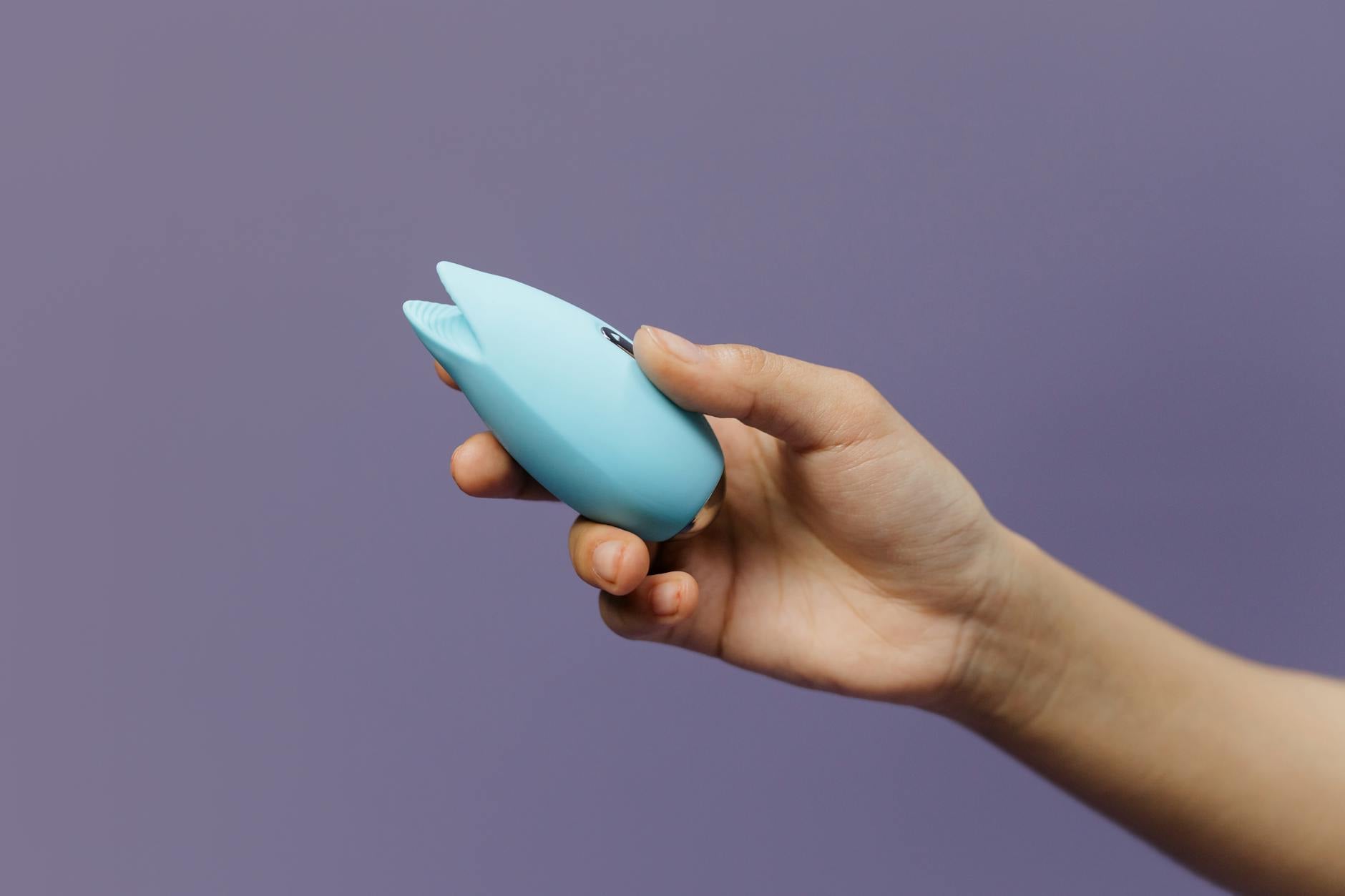
Let's talk about what actually happens to your nerves
Honestly, vibrator desensitization is real. Your vulva doesn't stop working. What happens instead is that your nerve endings get used to the same stimulus over and over, so you need more intensity or longer sessions to feel the same buzz. It's not a moral failing. It's neurology.
Here's the thing though: it's also completely preventable.
The good news is that desensitization isn't about vibrators themselves being bad for you. It's about using them in ways that train your nervous system to tune out the signal. Once you know how adaptation works, you can actually use lemon vibrators (and other clitoral vibrators) in ways that keep sensation sharp and alive.
Why lemon vibrators are different than other toys
Most traditional vibrators work through rapid oscillation. The Lem and other air-suction clitoral vibrators work through a completely different mechanism: they create waves of suction and release instead of pure vibration. This distinction matters because it changes how quickly desensitization sets in.
With consistent oscillation, nerve endings adapt faster. With suction, the stimulus pattern is more varied, which means your nervous system stays more engaged. That said, using any tool the same way every single time, at the same intensity, for the same duration, will eventually train your body to expect and downregulate that specific sensation.
The key to keeping your pleasure alive is variation.
The pattern that protects sensation
Here's the strategy I recommend to people who want to use lemon vibrators regularly without losing sensitivity:
Rotate intensities. If your lemon vibrator has multiple patterns or speeds, don't camp on one. Spend one session at pattern 2, the next at pattern 4, the next back at pattern 1. Your nervous system treats each as a different signal.
Change your approach every few sessions. One day, use it directly on the clitoris. The next time, use it on the labia or the area just above the clitoris. Position shifts matter. Your vulva has different nerve density in different zones.
Take breaks between sessions. This is the hardest one for people to hear, but it's the most important. Your nervous system needs time to "reset" its baseline sensitivity. If you use your lemon vibrator daily for 20 minutes, you're training constant adaptation. If you use it 3-4 times per week with 2-3 days off between sessions, your nerves stay fresh.
Mix in manual stimulation. Hands, fingers, or a partner's touch feel different than any toy. Alternating between clitoral vibrators and manual exploration keeps your nervous system in the habit of responding to varied input.
Why quick sessions actually help
This contradicts what a lot of people think, but shorter, more focused sessions preserve sensation better than long ones. Here's why: when you're chasing an orgasm intensely, you reach it faster. Your nervous system gets a clear, defined stimulus cycle and a clear resolution.
When you extend sessions trying to make it "better," you often increase intensity or duration to compensate for fading sensation. That cycle teaches your body to need more. Instead, aim for 10-15 minute sessions with a lemon vibrator, get to orgasm, and stop. Your nervous system will thank you by staying responsive.
I know that sounds counterintuitive. More time should feel better, right? Not always. Quality beats quantity in this case.
What lubricant choices have to do with this
This is subtle, but important. Using different types of lubricant changes the tactile feedback your nervous system receives. Water-based lube creates one type of glide and suction feel. Silicone-based feels different. Sometimes using a lemon clitoral vibrator dry feels sharper than lubricated.
Varying the lubrication context keeps your nerves engaged. One session with water-based lube, the next session with silicone (if your toy is compatible), or the next session dry if your tissue tolerates it. You're essentially adding variation to the stimulus without changing the tool itself.
How to know if desensitization is actually happening
Before you panic, understand the difference between adaptation and genuine numbness. Adaptation is when you're less responsive to the same tool after months of use. That's normal and preventable.
General numbness that doesn't recover after 2-3 weeks off, or pain during sex, or loss of sensation that spreads beyond your vulva into your thighs or elsewhere: those warrant a conversation with a gynecologist or pelvic health physical therapist.
Most people calling it "numbness" are actually experiencing adaptation. They try their lemon vibrator at the usual intensity and think "oh no, I can't feel it anymore." Then they take three days off, try it again, and sensitivity returns. That's adaptation, not damage.
The reset: when and how to take a break
If you notice you're needing higher intensity to orgasm, or sessions are getting longer instead of shorter, take a week off from toys entirely. Just one week. Your nervous system recalibrates fast.
During that week, explore other forms of pleasure. Manual stimulation. Partner touch. Kegel exercises to activate pelvic floor nerves differently. Mental arousal work. Honestly, some people find that week reveals they were bored, not desensitized. Boredom and adaptation feel similar but have different solutions.
After a week, when you return to your lemon vibrator, you'll notice the sensation feels fresher. That's your nervous system saying "oh, I remember this."
Combining lemon vibrators with other practices to sustain pleasure
Here's what I tell clients who want to use air-suction clitoral vibrators as part of a regular pleasure practice without losing sensitivity:
Use your lemon vibrator 3-4 times per week maximum. This is the single most important boundary. It leaves enough recovery time that your nervous system stays responsive.
Alternate it with other tools. Use a different vibrator sometimes. Use your hands. Use a partner if applicable. This variety keeps your nervous system flexible.
Change positions. Lying down, sitting up, squatting, on your side. Position changes alter nerve activation patterns.
Play with tempo. Turn your lemon vibrator on and off rhythmically instead of continuous use. This creates variation within a single session.
Track what works. Notice which patterns, intensities, and durations consistently feel best. Then purposely vary from that baseline sometimes. Your body adapts to predictability.
The underlying principle: your nervous system stays sharp when it's stimulated variably. The second you create a predictable routine, adaptation accelerates.
The emotional piece that matters too
Desensitization isn't only physiological. It's also psychological. If you're using your lemon vibrator as a fix for something disconnected about your pleasure, the tool isn't the problem. Boredom, low desire, relationship tension, stress, or feeling disconnected from your body can make any toy feel less exciting over time.
This is why I always ask people: is it the vibrator, or is it what's happening in your life right now? Sometimes the answer is both. If you're managing stress, reconnecting with your partner, or addressing anxiety, your pleasure responses shift regardless of which toy you're using.
People also ask
### Do lemon vibrators cause permanent numbness?
No. Vibrator desensitization is temporary adaptation, not permanent nerve damage. Your sensitivity returns within days or weeks of taking a break. If you're experiencing permanent loss of sensation after weeks off from toys, that's worth discussing with a healthcare provider, but it's not a vibrator issue.
### How long does it take to desensitize from a lemon vibrator?
It depends on frequency and intensity, but typically 6-12 weeks of daily or near-daily use at high intensity. If you're using a lemon clitoral vibrator 3-4 times per week at moderate intensity, most people don't experience noticeable adaptation. That's why frequency matters more than the tool itself.
### Can I avoid desensitization completely?
Not if you use any vibrator long-term. Some adaptation is inevitable with regular use of any toy. But you can keep it minimal and reversible by rotating intensity, changing positions, mixing tools, and taking breaks. The key is variation and recovery time.
### Is air-suction vibration less likely to cause desensitization than traditional vibration?
Yes, somewhat. The stimulus pattern is different enough that adaptation tends to happen slower. But "slower" doesn't mean "not at all." The same principles of variation and recovery still apply, maybe even more so because people sometimes use air-suction toys longer thinking they won't desensitize.
### What's the best frequency for using lemon vibrators long-term?
3-4 times per week is ideal for most people. That gives your nervous system enough exposure to stay comfortable with the tool, but enough recovery time that sensation stays fresh. If you're using daily, try cutting back to every other day or alternating days for a month and see if sensitivity improves.
### If I'm desensitized, how do I know when it's fixed?
Take a week or two completely off from vibrators. Then try your lemon vibrator at the lowest intensity. If sensation feels noticeably sharper than it did before the break, adaptation is reversing. You'll usually feel the difference immediately on that first session back.