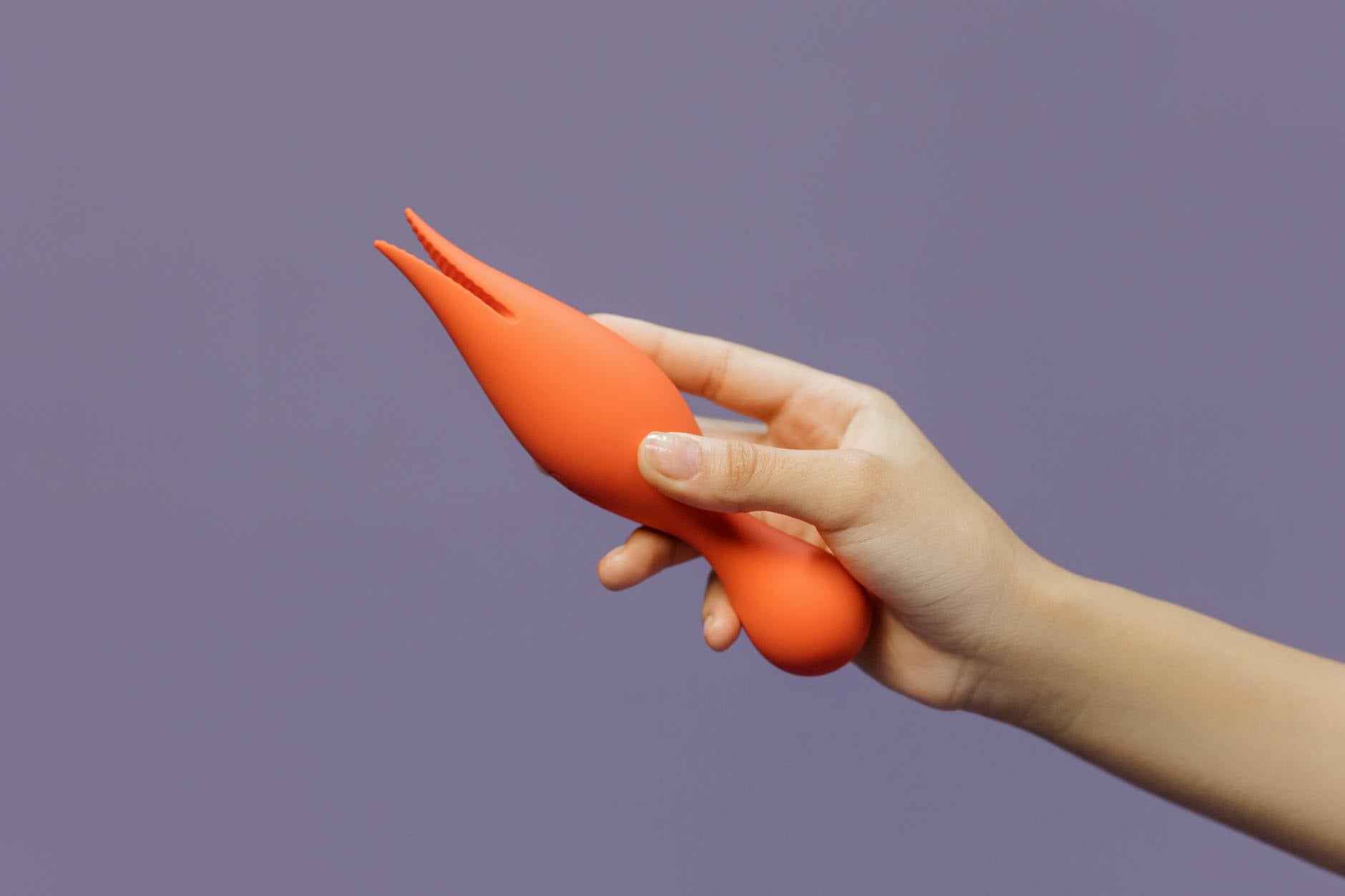
Let's talk about what desensitization actually is
Your vulva feels numb. Or responses that used to be quick now take forever. Or the sensation is flat, like you're touching someone else's body instead of your own. That's desensitization, and it's not as rare as you think.
It happens for concrete reasons: overuse of vibration at high intensity, sustained use of numbing agents, hormonal shifts, medication side effects, stress-induced shutdown, or sometimes just years of the same stimulation pattern. The good news is that sensation usually comes back. The better news is that the recovery process can actually feel like rediscovering pleasure all over again.
Here's what I want you to know upfront: desensitization is reversible, and lemon vibrators are one of the most effective tools in that recovery because of how they're designed to work with sensation, not against it.
Why numbness happens in the first place
When we talk about desensitization in clinical terms, we're talking about two separate but related problems. First, there's neural adaptation. Your nerve endings are getting the same signal repeatedly, and your brain stops responding to it as strongly. It's the same reason you stop noticing a background noise or a scent after a while. Your nervous system is designed to tune things out once they're not novel.
Second, there's physical desensitization. If you've been using high-intensity vibration for months or years, the tissue itself can become less responsive. The capillaries that feed sensation reduce their activity. The skin gets tougher. It's not permanent, but it's real.
Third, and this one matters most for relationship recovery, there's psychological desensitization. You've learned that you don't feel things, so your body stops trying. Your arousal response flattens because you've trained your nervous system that effort doesn't pay off. Breaking that pattern is the hardest part, and it requires intention.
The lemon vibrator advantage for recovery
Most vibrators work through direct vibration. The Lem and similar air-pulse clitoral vibrators work through rhythmic suction. That distinction matters enormously for desensitization recovery because suction stimulates the tissue differently than vibration does.
When sensation is dulled, your nervous system needs novelty to wake back up. Direct vibration, especially at high frequencies, is what probably got you here in the first place. Suction feels different. It's deeper, less frantic, and it engages different nerve pathways. For someone rebuilding sensitivity, that change in stimulation type is often the spark that reignites response.
Second, air-pulse technology allows for much more gradual intensity scaling. The Lem has multiple suction levels and several pattern options. That means you're not choosing between "nothing" and "intense." You're building up in small, trackable steps.
Third, suction tends to feel less aggressive on already-sensitized tissue, which means you can use it more frequently without irritation during recovery. That matters because consistency beats intensity when you're trying to retrain your nervous system.
The recovery protocol that actually works
Here's the framework I recommend to clients recovering from desensitization:
Week 1-2: Sensation mapping. Use the Lem on the lowest setting. Don't aim for arousal or orgasm. Spend 10-15 minutes just exploring different areas of your vulva. Where does the sensation feel strongest? Weakest? Can you feel a difference between the tip and the side? This isn't performance. It's reconnaissance.
Week 3-4: Pattern cycling. Once you've mapped where sensation lives, introduce the different patterns on the Lem. Spend a few minutes on each pattern, again at low intensity. Pay attention to which patterns create different sensations. Your body is learning to distinguish again.
Week 5-6: Slow escalation. Now you can start increasing intensity in one or two settings, but keep the pace glacial. Move from level 1 to level 2. Spend a full session there before moving to level 3. Your nervous system is re-establishing baseline sensitivity.
Week 7+: Arousal re-engagement. Once you're feeling genuine sensation at moderate intensity, allow yourself to pursue arousal again. But keep the lemon vibrator framework. You've just taught your body how to respond. Don't abandon that system immediately.
The timeline matters less than the progression. Some people need two weeks per stage. Others need six. The point is consistency and patience, not speed.
What kills recovery progress
Three mistakes I see constantly:
Jumping back to high intensity. Because you feel something at level 2, you think you can handle level 5. Then you're right back to numbness within a week. Resist this. The goal is to retrain your nervous system, not to prove you can feel strongly.
Going silent on what you're experiencing. If you have a partner, they need to know you're in recovery mode. Tell them what you're exploring. Invite them into the process, or at least make it clear that this is intentional and temporary. Otherwise, they interpret flatness as rejection, and you internalize their reaction as confirmation that something's wrong with you. It isn't.
Using numbing agents alongside recovery. I know they feel like a shortcut, but they work against what you're trying to accomplish. Your whole goal is to rebuild sensitivity. Benzocaine or lidocaine is the opposite of that. Skip them entirely during recovery.
The emotional piece that nobody talks about
Desensitization is often a symptom of something deeper. Chronic stress shuts down sensation. Unresolved conflict with a partner does too. Depression flattens everything. Sometimes the desensitization isn't the problem. It's the messenger.
Use the recovery period as an opportunity to check in with yourself. Are you stressed? Is there tension in your relationship that's making you pull back? Are you taking medications that have sexual side effects? Is your body asking for rest from something other than vibrators?
The lemon vibrator is a tool for sensation recovery. But if the real issue is emotional disconnection or chronic stress, you might need something else too. That might be a therapist, a conversation with your partner, or a medication adjustment. The physical work and the emotional work go hand in hand.
Signs you need professional help
Desensitization almost always improves with the protocol above. But if after eight weeks of consistent, patient use with a lemon vibrator you're still feeling nothing, get checked out. Sometimes desensitization points to:
Hormonal imbalance (hypothyroidism, diabetes, low estrogen). Neurological issues (nerve damage from sustained pressure or injury). Medication side effects (antidepressants, antihistamines, blood pressure meds all affect sensation). Vascular problems (reduced blood flow means reduced nerve response).
None of those are permanent, but they need diagnosis. A good gynecologist or menopause specialist can rule them out quickly.
The bigger picture
Recovery from desensitization isn't just about getting sensation back. It's about rebuilding your relationship with your own pleasure. For months or years, your body has been telling you "this doesn't work anymore." Now you're telling it "we're starting over, and we're going to listen to what actually feels good."
That's profound work. It deserves the time it takes. The lemon vibrators are the vehicle, but the real recovery is remembering that your pleasure matters and is worth the patience to rebuild.
Frequently asked questions
How long does it take to recover full sensation after desensitization?
Most people report noticeable improvement in 4-6 weeks and significant recovery in 8-12 weeks. Some recover faster, some slower. The timeline depends on how long the desensitization lasted, your stress level during recovery, and how consistently you follow the gradual escalation approach. Age, hormonal health, and whether you're taking medications that affect sensation all factor in. The key is consistency over speed. Skipping days or jumping ahead in intensity will slow you down.
Can I use lemon vibrators alongside vibrators I've been using, or should I switch completely?
Switch completely during recovery. The whole point is novelty. Your nervous system got adapted to whatever pattern you were using before. If you keep using it, you're fighting the desensitization while trying to heal it. Give your body a clean break for at least 8-12 weeks. After recovery is complete, you can reintroduce other tools if you want, but most people find they prefer the depth of sensation from lemon clitoral vibrators and don't go back.
Is desensitization permanent if I don't treat it?
No. Sensation naturally returns once the stimulus changes or stops. But the longer you go without addressing it, the more psychologically entrenched the pattern becomes. People start believing their body is broken. They stop trying. Then the physical recovery takes longer because the mental block is so strong. That's why early intervention with a lemon vibrator and a clear protocol matters. You're not just healing tissue. You're interrupting the story your brain has built about what you can feel.
Can my partner help with sensation recovery, or is this a solo process?
Your partner can help enormously, but the early stages work better solo. The pressure of partnered sex often triggers performance anxiety, which numbs sensation. Spend 4-6 weeks doing the sensory mapping and pattern cycling alone. Once you're reliably feeling at moderate intensity, invite your partner to witness or participate. The most helpful thing a partner can do is understand that flatness isn't rejection and that recovery takes time. If they're supportive, that removes a huge psychological block.
What if lemon vibrators don't work for me?
They work for most people, but not everyone. If after 6-8 weeks of faithful use you're not noticing change, consider these variables: Are you actually following the low-intensity, slow-escalation protocol, or are you jumping to high levels? Are you stressed or in conflict that's suppressing sensation? Are you taking medications that numb sensation? Have you talked to a doctor about underlying health issues? If you've controlled for all of those and sensation still isn't returning, see a gynecologist or sex therapist. Sometimes desensitization points to something that needs medical attention, and that's important information to have.
Is it normal to feel emotional during recovery?
Completely normal. Sensation recovery often brings up feelings. Relief, grief, anger, frustration. Your body has been numb, and now it's waking up. That can trigger emotional release. Some people cry during sensation recovery. Others feel vulnerable or raw. That's not a sign something's wrong. It's a sign something's healing. Give yourself space for whatever comes up. A therapist can be helpful if the emotions feel overwhelming.
Your next step
Desensitization is treatable. Your body wants to feel pleasure again. You just need the right approach and the patience to let it happen. Start with the Lem on the lowest setting this week. Spend 15 minutes with no goal except learning what your vulva actually feels like right now. From there, the recovery unfolds naturally.
If you have questions about which lemon clitoral vibrator might work best for you or want personalized guidance, reach out. We're here to help.