Here's the thing about arousal timing
You're not slow. Your body isn't broken. What's changed is the expectation. For decades, mainstream culture told us that arousal should be instant. Foreplay should be brief. The entire experience should build and resolve in a predictable arc. That's wrong, and it's especially wrong if you're in your 40s, managing stress, on hormonal birth control, recovering from a medical event, or simply existing in a body that's learned to be more cautious over time.
Slower arousal is actually incredibly common. Data from the American Academy of Sexual Medicine suggests that extended warm-up time affects roughly 40% of people with vulvas at some point in their sexual life. This isn't a pathology. It's a completely normal variation in sexual response. And here's what nobody tells you: slower arousal often leads to deeper, more intense orgasms. You're not losing something. You're gaining access to a different kind of pleasure.
Why arousal takes longer (and why it's not your fault)
Three major culprits shift your sexual timing:
Hormonal changes. Estrogen influences blood flow, tissue sensitivity, and neurotransmitter availability. Birth control, perimenopause, thyroid issues, and even sustained stress all lower estrogen temporarily or long-term. Lower estrogen means your nervous system needs more input to register arousal signals.
Stress and nervous system fatigue. When you're chronically stressed, your sympathetic nervous system (the fight-or-flight system) stays partially activated. Arousal requires you to shift into parasympathetic mode. That shift takes time, especially if your body has spent months or years in threat mode.
Age-related changes in blood flow and tissue. Vascular elasticity changes slightly over time. Blood reaches the clitoris more gradually. Tissue takes longer to engorge. This is not regression. It's physics.
None of these are personal failures. They're biological facts.
The timing mismatch problem
Here's where things get sticky. If you have a partner, they might still be operating on the old timeline. Ten minutes of foreplay and they're ready. Meanwhile you're at 30% arousal and feeling pressure to "hurry up."
That pressure is the actual problem, not your body. Pressure activates your sympathetic nervous system all over again. You're essentially fighting your own biology while also fighting social expectation. No wonder it feels harder.
The solution isn't to force yourself to speed up. It's to separate the two timelines and work with them honestly. If you need 25 minutes of warm-up and they need 5, you're not incompatible. You just need different foreplay. Lemon clitoral vibrators are specifically useful here because they let you self-direct stimulation while your partner does something else. You're not waiting for them to figure out the right touch. You're actively building your own arousal.
How lemon vibrators work with extended arousal
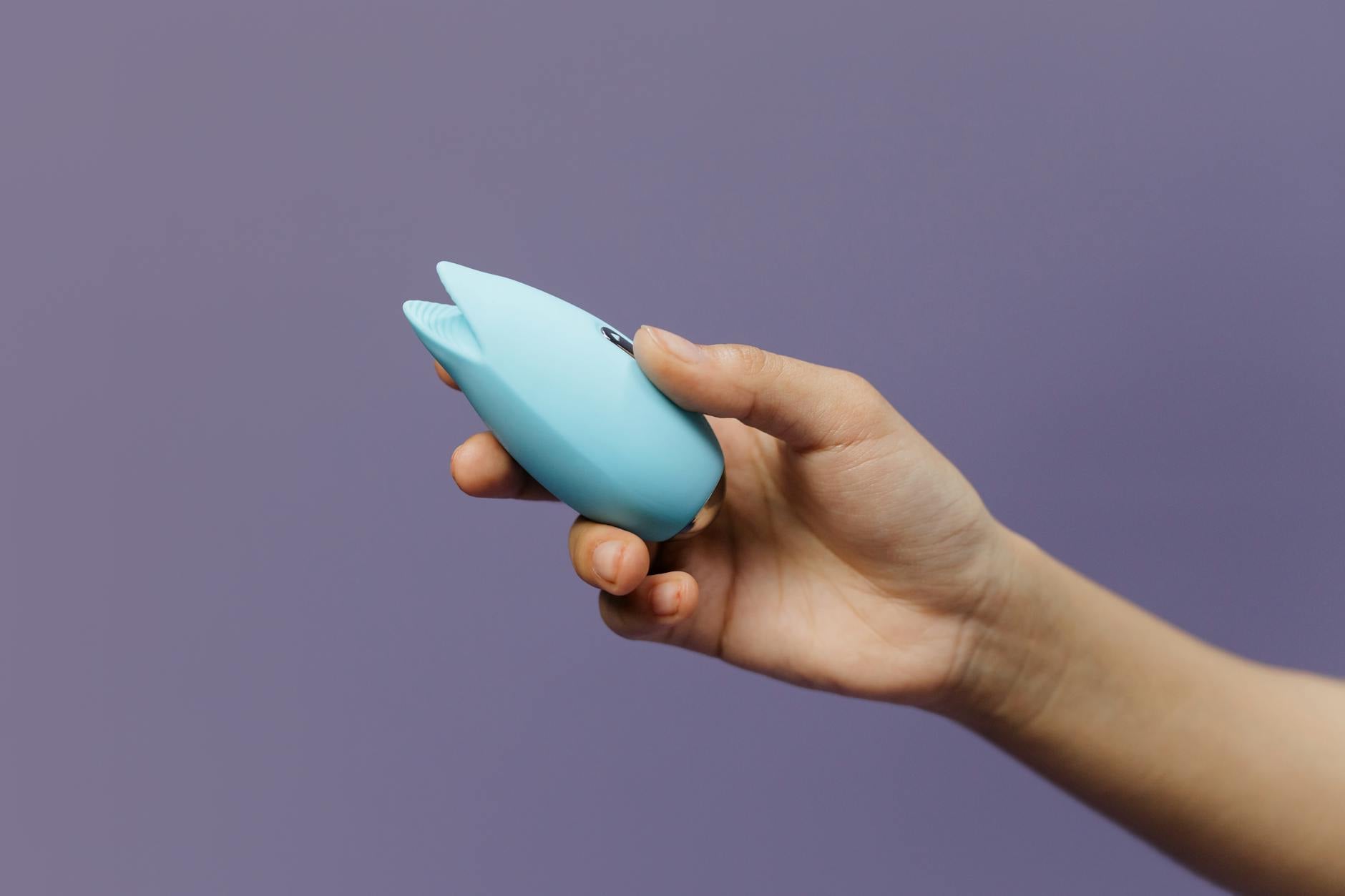
The suction mechanism in a lemon vibrator is uniquely suited to longer warm-up sessions for one simple reason: it stimulates without requiring the intense focus and precision of manual touch.
When you're just starting to wake up arousal, direct clitoral touch can feel too intense or even irritating. The lemon vibrator sits over the clitoris without direct contact, creating gentle suction that builds sensation gradually. You can stay on pattern 1 or 2 for 10-15 minutes without fatigue. Traditional vibrators require either constant high intensity or switching between patterns, which interrupts your focus. The lem's steady suction allows for what I call "sustainable arousal building." Your sensation keeps climbing without spiking, which is exactly what extended warm-up needs.
Building arousal in stages
I recommend breaking slower warm-up into deliberate stages:
Stage one: 0-8 minutes. Ambient pleasure (patterns 1-2). This is the phase where you're not trying to get anywhere specific. You're just exploring sensation. No pressure for this to become urgent arousal yet. Use lower settings. Light touch. If you're with a partner, they might massage your neck, shoulders, or back while you explore. The point is sensory variety without goal orientation.
Stage two: 8-16 minutes. Building intensity (patterns 2-4). Now arousal is starting to register. Blood flow is increasing. Your clitoris is beginning to engorge. This is where you might increase pattern speed or try the pulsing settings. If you're with a partner, this is a good moment for kissing, light penetration, or partnered touching while you guide the vibrator placement.
Stage three: 16+ minutes. Sustained pleasure (patterns 3-6). You're genuinely aroused now. The clitoris is fully engorged. Sensation has become more acute. This is where faster patterns feel good instead of overwhelming. You can experiment with angles, intensity shifts, and sustained pressure.
The reason this stages approach works is neurological. Your brain needs time to shift into erotic attention. That shift can't be rushed. But it can be supported by steady, building stimulation.
What to do if arousal still feels stuck
Sometimes extended warm-up isn't the whole picture. Sometimes arousal genuinely stalls out. That's a different problem.
If you're stuck at "mildly interested" and can't move forward no matter how much time you invest, check three things. First, are you in a parasympathetic state? If your shoulders are tense, your jaw is tight, or you're mentally reviewing your to-do list, your nervous system isn't ready. Take five minutes to breathe. Actually breathe. Box breathing (4-count in, 4-count hold, 4-count out) genuinely works.
Second, check your context. Are you actually available? Or are you having sex because you think you should? Obligation activates threat response. Your body will resist.
Third, consider whether the issue is physical or psychological. If your clitoris feels completely numb no matter how long you stimulate, that's worth mentioning to a doctor. But if you feel sensation but no desire, that's often a nervous system or relationship question, not a sensation question. A lemon vibrator can't fix that. Honesty with yourself and your partner can.
Patience as a feature, not a bug
Here's what I tell my clients: slow arousal is the body's way of asking you to slow down. That's actually a gift in a world that moves too fast.
When you settle into an extended warm-up, something shifts. You stop treating arousal as a sprint to orgasm. You start treating it as pleasure itself. Twenty minutes of steady sensation, with no deadline, is genuinely different from five minutes of intense pressure. You get to enjoy the full arc of your own desire. That's rare. That's valuable.
If you're using a lemon vibrator during this extended phase, you also get to stay mentally present. You're not managing a partner's timing. You're not worried about your body's responsiveness. You're just following sensation. That presence deepens everything that comes after.
Working with a partner through slower timing
If you're with someone, the conversation matters more than the technique.
Instead of "I take longer now," try "I want us to try something different. I'd like 20 minutes of warm-up before I move into intensity." That's not a complaint. That's a plan. Give them something to do that isn't standing around watching. Reading to each other. Massage. Oral sex while you use your lemon vibrator. Partnered exploration of your own pleasure together. The point is that you're both active, both engaged, and nobody's waiting.
Many couples find that extended warm-up actually improves their connection. You're moving slowly. You're paying attention. You're not rushing toward a finish line. That's intimacy.
People also ask
Is it normal for arousal to take 20-30 minutes?
Completely normal. In fact, research from sexual medicine shows that most people with vulvas benefit from 15-25 minutes of stimulation before they're fully aroused. The cultural narrative about "instant arousal" was never based on actual physiology. It was based on fantasy. Your timeline is the right timeline for your body.
Can I make arousal happen faster?
You can support faster arousal by managing stress, sleeping adequately, and staying hydrated. But trying to force arousal to move faster usually backfires. The sympathetic nervous system activates, and you actually take longer. Acceptance of your actual timeline is more effective than fighting it. That said, if arousal suddenly became dramatically slower than your baseline, that's worth discussing with a doctor. A change in timeline can signal hormonal shifts or stress that's worth addressing.
Should I use a higher pattern if arousal is slow?
No. Actually the opposite. Start lower and build. High intensity on numb tissue feels unpleasant, not stimulating. Low intensity on awakening tissue feels increasingly good. You want to move up patterns as arousal increases, not jump to high intensity to force arousal to happen. Patience works. Force doesn't.
Does lube help if arousal takes longer?
Yes, strategically. Slower arousal sometimes means slightly less natural lubrication during the early phases. Water-based lube on or around the clitoris (if you're using it externally) removes the micro-friction that can feel annoying when tissue is just starting to respond. As arousal builds and natural lubrication increases, you might not need it, but it's useful in stage one.
What if my partner gets impatient with extended warm-up?
Then you have a relationship conversation, not a timing problem. If your partner isn't willing to invest 20 minutes in your arousal when they benefit from the outcome, that's information. Genuine partnership means being willing to move at each other's pace sometimes. If they consistently prioritize speed over your pleasure, that's a pattern worth examining outside the bedroom too.
Can depression or anxiety affect how fast I get aroused?
Absolutely. Depression literally slows down your nervous system's ability to recognize and respond to pleasure signals. Anxiety keeps you in threat mode, which blocks arousal. Both are worth addressing directly. Therapy, medication, and lifestyle changes can shift your actual arousal timeline, not just your experience of it. A lemon vibrator can be part of the solution, but it's not the whole solution if underlying mental health is the culprit.
The bottom line
Your body isn't slow. Your body is honest. It's telling you what it actually needs to feel good. The lemon vibrators and other clitoral vibrators work best when you listen to that message instead of fighting it. Extended warm-up isn't a limitation. It's an opportunity to experience pleasure more deeply, with more presence, and with more time to actually enjoy the sensations building in your body.
If you're frustrated with your timing or your partner is, that's a conversation worth having. But the conversation isn't about fixing your body. It's about designing sex that works for both of you. That might mean longer foreplay, different foreplay, partnered vibrator use, or just an agreement to stop rushing. Whatever works for your actual bodies, not the fantasy ones.
Your pleasure matters exactly as much as anyone else's. And it deserves time.