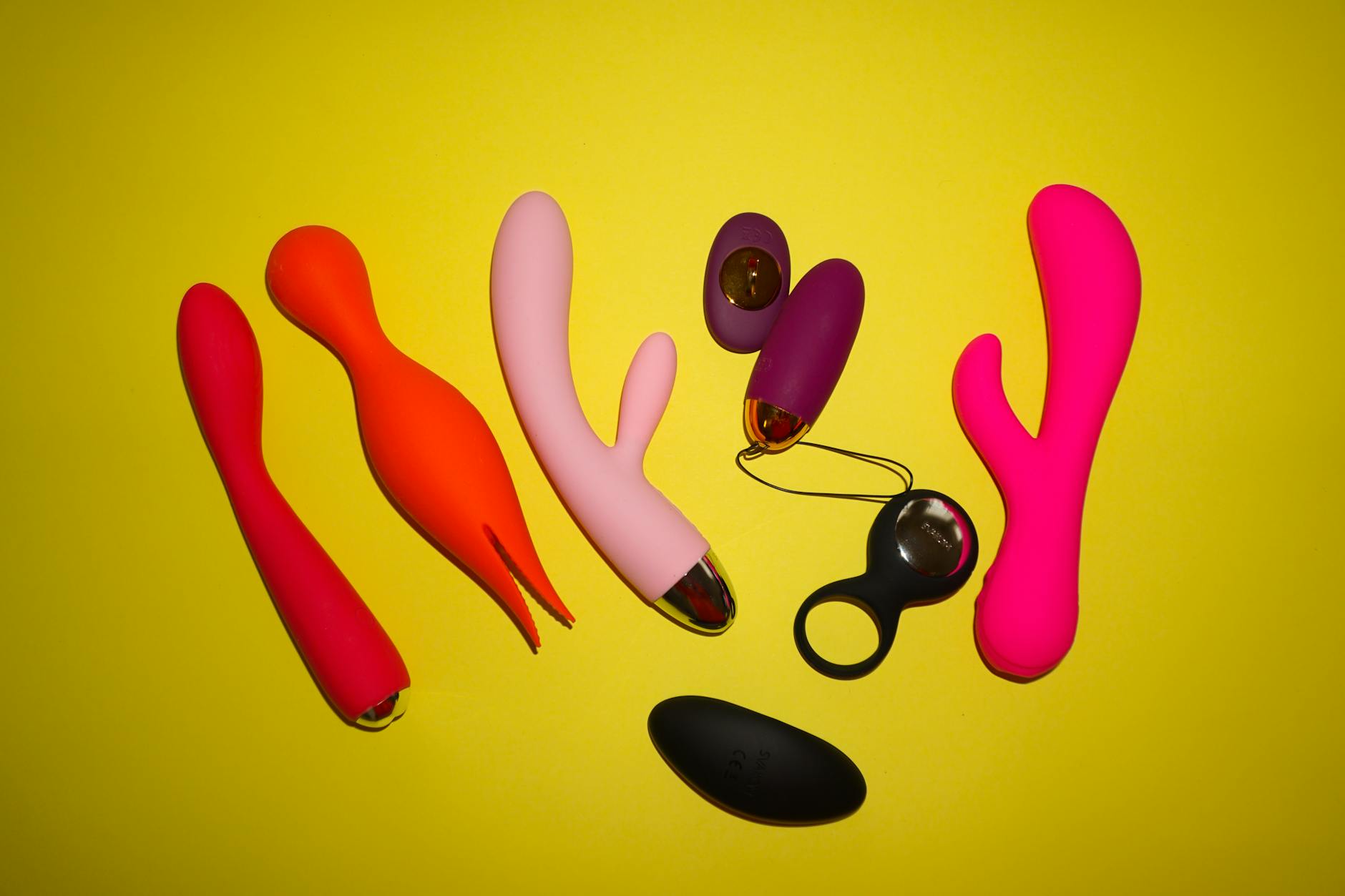
Here's what nobody tells you about your clitoris
Your clitoris has its own rhythm. It swells and recedes, becomes hypersensitive or muted, craves intense pressure one week and feather-light touch the next. This isn't malfunction. It's physiology. Hormones flood through your body every 28 days, and your nerve endings are paying attention.
Most people think pleasure should feel the same every time. It shouldn't. It won't. And once you stop fighting that, lemon vibrators and other clitoral toys become infinitely more satisfying.
What hormones actually do to sensation
During the follicular phase, estrogen is climbing. Your clitoris becomes more engorged. Blood flow increases. Tissue swells slightly. Everything feels closer to the surface, more accessible. Sensation ramps up naturally.
Around ovulation, sensation peaks. Your body is primed. Some people report that orgasms feel stronger, arrive faster, and refractory time shrinks. This is your body doing exactly what it's supposed to do.
Then comes the luteal phase. Progesterone rises. Everything reverses. Tissue recedes slightly. Sensitivity dulls. You might need more stimulation to feel the same intensity. Pressure that felt perfect last week now feels thin. This is not your device failing. This is your body changing.
Many people assume this means something is wrong. It means something is right. You're responding to biology.
How to read what your body actually needs
Three signals matter:
Engorgement. In your follicular phase, your clitoris is literally bigger. It protrudes more visibly. The glans sits higher. This changes which part of your lemon vibrator makes contact with which nerve. A setting that felt perfect on day seven of your cycle might feel off on day twenty-one because your anatomy has shifted slightly.
Texture tolerance. Early cycle, some people want direct, intense contact. Mid-cycle, absolutely. Late cycle, many people need the vibe to work with more space, more finesse. Direct suction on a lemon clitoral vibrator feels different when your tissue is plump versus when it's thinned slightly by hormones.
Recovery speed. Follicular phase orgasms often come quickly and bounce back quickly. Luteal phase can take longer to arrive and longer to reset. This isn't laziness. This is your nervous system running on a different fuel.
Pay attention to these three things across three full cycles. Write down what feels good when. The data will tell you everything.
Adjusting your routine by phase
Follicular phase (days 1-13ish)
This is your orgasm-chasing phase. Estrogen is rising, your clitoris is responsive, and intensity tolerance is high. Here's what works.
Start at intensity level three or four on your lemon vibrator instead of level one. Your body can handle it. Many people find they skip the warm-up entirely in this phase because arousal builds so fast. Your tissue is already primed.
Experiment with direct contact. Press the suction cup directly against your clitoris without worrying about causing numbness. Your follicular nervous system can handle sustained high intensity better. Some people use this phase to explore higher patterns they've been nervous about.
Orgasm frequency often jumps. Multiple orgasms feel more accessible. Refractory time shrinks. If you usually need ten minutes between, expect five or six. Some people skip the gap entirely.
Ovulation window (days 12-16ish)
This is your peak. Sensation is maxed out. Some people report that orgasms feel almost involuntary during this window.
Your clitoris is at maximum engorgement. This is when a lemon clitoral vibrator hits hardest. Go for it. Higher intensities, longer sessions, more pressure than feels necessary. Your body is asking for it.
Some people find that orgasms during ovulation feel qualitatively different. Wider, deeper, more radiating. This is testosterone spiking on top of peak estrogen. Let it.
Luteal phase (days 17-28)
Progesterone is now the dominant hormone. Your clitoris has receded. Tissue is thinner. Sensitivity has dropped. Everything takes longer.
Drop your starting intensity by one to two levels. If you started at three in the follicular phase, begin at one. If you started at four, begin at two. This is not compromise. This is reading your body accurately.
Use more warm-up time. Budget fifteen to twenty minutes instead of five. Let arousal build slowly. A lemon sucker works beautifully in this phase because suction stimulates in a way that doesn't require intense direct friction.
If sensation feels numb or muted, don't increase intensity until you've given arousal time to work. Fifteen minutes of lower-intensity stimulation often delivers more sensation than five minutes of maximum power.
Orgasms during luteal might take longer. This is normal. Some people find that luteal orgasms feel deeper but take more intention. Honor that. The destination is worth the road.
Common mistakes people make
Assuming one setting works year-round. It doesn't. Locking yourself into a single routine wastes your device's potential. Your lemon vibrator is designed for variation.
Pushing harder when sensation feels muted. The instinct is to compensate by increasing intensity. Wrong move. Give arousal time instead. Low intensity plus thirty minutes almost always beats high intensity plus five.
Ignoring pain as hormonal. Soreness during luteal phase is common, but pain is not. If something hurts, stop. Pain during certain phases can signal that direct suction isn't working and you need a different angle or toy shape. A lemon clitoral vibrator might be perfect for your follicular phase and genuinely uncomfortable in luteal. That's fine. Use different tools.
Comparing across partners or across time. Your response changes monthly. Your partner's response changes monthly. Orgasms with your partner look different than solo sessions. Data from three years ago is irrelevant. Work with what your body is doing now.
Tracking without obsession
You don't need an app. You need three bits of information: the date, which phase you're in, and one sentence about what felt good.
Day 8. Follicular. Lemon vibrator at level 4 felt perfect, came twice.
Day 23. Luteal. Lemon vibrator at level 2 felt better, needed twenty minutes, one strong orgasm.
One sentence per time you use your device. After two cycles, patterns emerge. You'll start predicting what you'll want before you even think about it.
Some people track orgasm quality: quick and peaky in follicular, deep and radiating in luteal. Some track sensation: sharp and focused early cycle, broad and diffuse late cycle. Some track timing: fast early cycle, slow late cycle. Whatever resonates, track it.
Why partners need to know this too
If you have a partner, this becomes a shared conversation. "My clitoris responds differently every week" is not rejection or broken feedback. It's crucial data.
When you know you're in your luteal phase, you can say, "I'll need more warm-up time tonight, probably longer to arrive, maybe a lighter touch." That's not changing plans. That's giving your partner a roadmap.
Some partners worry that paying attention to these shifts means sex becomes clinical. The opposite happens. When both of you understand that sensation changes, you stop blaming each other for changes in response. You start treating each other's bodies like complex instruments that deserve proper tuning.
What to do if your cycle feels wildly inconsistent
Cycles don't always run like clockwork. Stress, travel, medication, illness, age, and a dozen other factors shift your hormonal timing.
Instead of following a calendar, follow sensations. Is your clitoris visibly swollen right now? Is arousal building fast? Are you coming quickly? That's likely your follicular or ovulation window. Does sensation feel muted? Is warm-up taking longer? Are orgasms deeper but slower? That's likely your luteal.
Your body is always honest. The calendar is just convenience.
If your cycles are consistently irregular or sensation is consistently muted across all phases, talk to a doctor. Thyroid issues, hormonal conditions, medication effects, and pelvic floor dysfunction can all flatten sensation. None of those are permanent, and none of them mean you're broken. They just mean you need a different kind of support alongside your lemon vibrator.
The actual reason to do this
Adapting your routine to your cycle isn't about optimization. It's about permission. Permission to want different things different weeks. Permission to need different intensities. Permission to let your pleasure respond to your biology instead of fighting it.
Most people spend their sexual lives assuming their bodies should behave consistently. Your body isn't a machine. It's a complex organism running on a monthly rhythm. Once you align your lemon vibrator routine with that rhythm instead of against it, pleasure stops feeling like something you have to chase. It becomes something you're already inside of.
Start tracking. Notice the patterns. Adjust accordingly. Your clitoris will thank you.
People also ask
Q: Can I use my lemon vibrator during my period?
Absolutely. Some people find period sex or solo pleasure during menstruation deeply satisfying. Your clitoris is responsive, and orgasms can help with cramps. Use the same logic as your follicular phase. Sensation is generally higher. If anything feels uncomfortable, back off. A water-based lubricant helps if you're concerned about mess, though it's honestly not necessary.
Q: What if my cycle is irregular or I don't menstruate?
This system works with any cycle length. Twenty-one days, thirty-five days, sporadic. You're tracking sensation, not calendar dates. If you don't menstruate due to hormonal birth control, you might notice sensitivity shifts anyway because your body still has hormonal fluctuations, even while on contraception. Some people notice zero shift. Both are normal. Track what you actually feel instead of expecting a particular pattern.
Q: Does this work if I'm on hormonal birth control?
It might. Many people on combined hormonal pills still notice subtle shifts in sensation even though their hormones are suppressed. Some notice nothing. The only way to know is to track. If you're on the pill and sensation feels flat year-round, that's worth discussing with your doctor. Switching pills, changing dose, or trying a different method sometimes helps.
Q: Should I use different lemon vibrators for different phases?
You don't have to, but some people do. A lemon clitoral vibrator like the Lem works beautifully across all phases if you adjust intensity. But some people keep a second device that suits their luteal phase better. A quieter vibrator, a smaller shape, something with more finesse. It's nice to have options, but not necessary.
Q: What if orgasms feel worse after tracking?
Stop tracking. This is supposed to increase pleasure, not create pressure. If data-gathering feels like work, just listen to your body in the moment instead. Some people thrive on information. Some people thrive on intuition. Both are valid.
Q: Can my partner help me notice these shifts?
Yes. Some partners are brilliant at noticing "your responses feel sharper today" or "you seemed to need longer tonight." If your partner is observant and you're comfortable with that feedback, it's useful data. Just make sure it doesn't become criticism. "You're always slow in the second half of your cycle" is information. "Why are you always slow" is blame. Stay on the side of curiosity.
Final thought
Your pleasure isn't broken. It's responsive. That's better. A lemon clitoral vibrator paired with cycle awareness isn't just about better orgasms. It's about living inside your body instead of fighting it. That's where real satisfaction lives.