Let's talk about the elephant in the bed
Your medication isn't failing you. But it might be tanking your sex drive, and nobody warned you that the trade-off would hit this hard.
SSRIs are brilliant for anxiety and depression. Antipsychotics work. Birth control prevents pregnancy. These are real wins. But somewhere between "take this daily" and actually taking it, your arousal got quietly hijacked. You're not broken. Your brain chemistry shifted on purpose. And yes, there are tools that can help you find your way back.
How medications actually kill arousal
It's not one mechanism. It's three.
First, SSRIs and SNRIs mess with serotonin reuptake to lift mood. That's the whole point. But serotonin also regulates sexual response. High serotonin can flatten dopamine signaling, and dopamine is basically the desire chemical. So the thing that's keeping you stable is, paradoxically, making arousal harder to access.
Second, antipsychotics and some antidepressants increase prolactin, a hormone that suppresses sexual interest and can reduce genital sensation. It's not gradual. People notice it within weeks.
Third, hormonal birth control rewires how your body responds to its own natural estrogen and testosterone. Lower testosterone means lower baseline desire. That's biochemistry, not psychology.
None of this is your fault. None of it is fixable by "just relaxing" or "trying harder."
Why lemon clitoral vibrators are different when meds are involved
Here's the thing about medication-induced arousal issues: they're not about your brain's capacity for pleasure. They're about access to the initial spark. Your nervous system is chemically dampened, so it takes more stimulation to wake up.
Lemon vibrators, and specifically air-suction clitoral vibrators, work differently from traditional vibrators. Instead of relying on friction or buzz alone, they create a gentle suction that stimulates the entire clitoral complex, including the internal branches most people never contact. That matters when your sensitivity is suppressed.
Why? Because suction creates a broader, gentler wave of stimulation. It doesn't require the intense sensation that many medication-takers have lost. You're not fighting numbness with more intensity. You're using a different pathway entirely.
Building your medication arousal recovery plan
Start with the timing conversation
Talk to your prescriber about when you take your medication. Some people can shift their dose timing so the peak effect is outside their sexual window. An SSRI taken in the morning might leave you more responsive by evening. It's a small thing, but timing matters.
Don't stop taking your medication. Ever. But working within the schedule you've got? That's fair game.
Warm up twice as long
When arousal is dampened chemically, your baseline of desire is lower. Budget 20-30 minutes of mental and physical warm-up before you expect pleasure to show up. This isn't sex therapy talk. This is neuroscience. Your brain needs more input to reach the same output.
Start with things that engage you mentally. Read erotica. Watch something that lands for you. Touch yourself over clothing first. Let your brain warm up before your body.
Use Hello Nancy's lemon vibrators at lower settings, longer
Your instinct might be to crank the intensity to break through the numbness. Resist it. Start at pattern 1 or 2 on the Lem and stay there for 5-10 minutes. You're not chasing sensation. You're coaxing it out.
The genius of air-suction technology is that it works on a different neural pathway than buzz. So even at low settings, you might feel something you weren't expecting. Give your body time to decode the signal.
Lubricate generously
Many medications dry out genital tissue. Add a water-based lubricant before you start. The lemon clitoral vibrator glides better with it, and lubrication itself is a sensory input that your brain registers as arousal preparation.
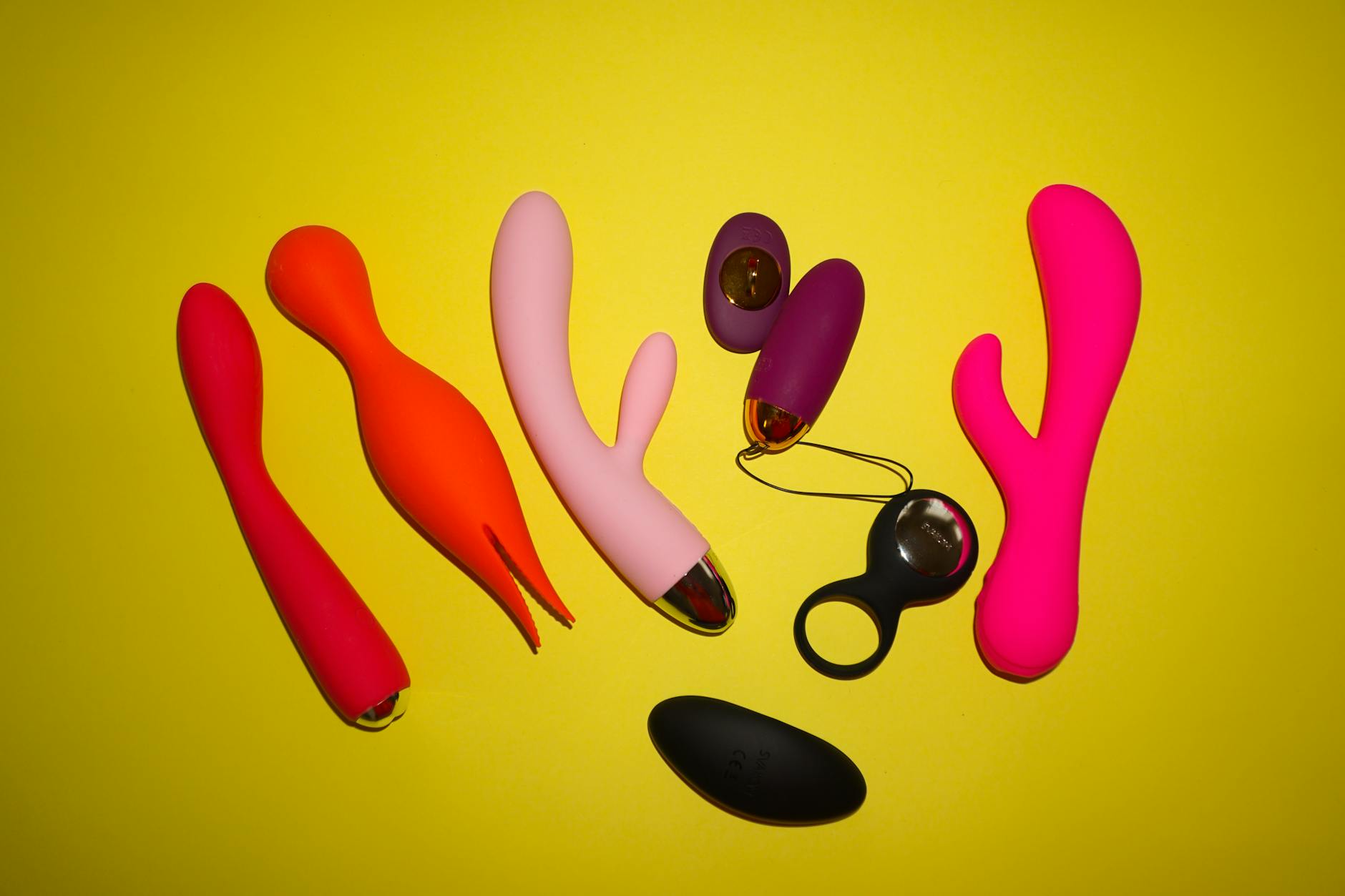
Photo by FounderTips on Pexels
The conversation you need to have with your partner
If you're partnered, separate the story you're telling yourself from the truth. The story is "my meds killed my desire, and therefore something is wrong with us." The truth is "my meds changed my neurobiology, and we're adjusting how we approach pleasure together."
One is a relationship problem. One is a logistics problem.
Tell your partner: "This isn't about you. This isn't about us. This is my brain chemistry. I'm going to rebuild this with tools that work for my body right now, and I want you involved when I'm ready." If you're using a lemon vibrator, partner involvement might mean they're the one who hands it to you, or they're present while you explore, or you're taking turns with self-pleasure while together. The shape matters less than the honesty.
When to loop in your doctor
If you've been on the same medication for months and arousal hasn't returned, mention it. Seriously. Your doctor can:
- Adjust your dose (sometimes lower is more livable).
- Switch you to a different class of antidepressant or antipsychotic with different side effect profiles (bupropion, for instance, is famously less libido-crushing).
- Add an augmentation medication that counters the sexual side effects.
- Refer you to a sex therapist or reproductive endocrinologist.
None of this is weakness. It's precision medicine. Your mental health matters. Your sexual health also matters. Both can be true.
The reality of rebuilding arousal on medication
You might not get back to exactly where you were before. Your neurobiology has shifted. But many of my clients report that their pleasure actually becomes more deliberate, more present, more reliable once they accept the new normal and work with it instead of against it.
Lemon vibrators help because they meet your body where it is. Not where it was. They create sensation that doesn't require the natural desire cascade your medication is suppressing. You're not faking arousal. You're bootstrapping it with technology until your brain catches up.
It takes patience. Three months is a reasonable timeline to see what's possible. If you're still completely numb after that, escalate to your doctor. But most people find something.
FAQ: Medication and Lemon Vibrators
Can I use a lemon vibrator if I'm on SSRIs or SNRIs?
Yes. In fact, many people find air-suction vibrators work better when traditional vibrators feel useless. SSRIs don't make you incapable of pleasure. They raise the threshold for accessing it. A lemon clitoral vibrator's broader stimulation pattern is often more effective than buzz-focused toys for medication-affected arousal. Start low and give yourself time.
How long does it take to feel arousal again after starting medication?
It varies wildly. Some people adjust within weeks. Others plateau at a lower baseline that requires deliberate tools like lemon vibrators to access. If you're still completely numb after three months, talk to your prescriber about timing adjustments or alternative medications. But many people discover that with the right approach, pleasure is absolutely recoverable.
Will my medication interfere with orgasm if I use a lemon vibrator?
Not interfere with it so much as delay it. Orgasm is possible on SSRIs and most antipsychotics, but it typically takes longer to build and might feel less intense. That's where patience and air-suction technology help. You're not failing. Your nervous system is just operating at a different speed. Lemon vibrators' broad stimulation often bridges that gap better than other tools.
Should I tell my partner I'm using a lemon vibrator because of medication side effects?
If you're in a partnered relationship and want to maintain intimacy together, yes. Frame it as collaborative problem-solving, not a secret. Most partners actually feel relieved to understand the issue is biochemical, not relational. It takes the pressure off them and gives you both a concrete tool to work with.
Can I switch medications to restore my sex drive?
Possibly. Talk to your prescriber. Some medications like bupropion or mirtazapine have different sexual side effect profiles. Others can be dosed differently or taken at different times to shift when the peak effect hits your day. You might also benefit from an augmentation medication that counters sexual side effects. Don't change anything on your own, but bring the conversation to your doctor as a legitimate health concern.
Is it normal to need toys to feel aroused when you're on medication?
Yes. When your brain chemistry is altered, your body's natural arousal machinery operates at a lower capacity. That's not a flaw in you. That's how neurotransmitters work. Lemon vibrators and other tools aren't a crutch. They're a bridge. Many people step back from them once they adjust, or they keep using them because, honestly, they work really well and why not? Your pleasure matters more than the ideology of "natural" arousal.
You're not broken. You're medicated.
There's a difference. One is permanent. One is a chemical reality you're navigating intelligently. Lemon vibrators, patience, honesty with your partner, and a willingness to rebuild pleasure on new terms? That's how you move forward.
Your arousal might look different now. But different doesn't mean gone. If you're ready to explore what's possible with your body as it actually is, not as you wish it were, start here. And if you need more support beyond tools, reach out to Hello Nancy. We're here.