The thing nobody tells you about pleasure
Asking for what you want in bed is terrifying. Not because you don't know what you want. But because somewhere along the way, you learned that wanting things meant being difficult, needy, or too much. So you stopped asking. And your body learned to live smaller.
Here's the paradox: a lemon clitoral vibrator won't fix that silence. But it can be the first brick you remove from the wall between you and your own voice.
Why asking feels harder than it should
Most of my clients don't struggle with desire. They struggle with permission. There's a difference.
Desire is the biological push toward pleasure. Permission is the psychological go-ahead you give yourself to actually want it out loud. And for a lot of people, especially women socialized to be accommodating, permission got stuck somewhere around age 13.
The stories we internalize are wild. If you liked things too much, you were thirsty. If you asked directly, you were selfish. If you had opinions about your own pleasure, you were complicated. None of that is true. But we still believe it, sometimes without even knowing we do.
When you can't ask for what you want, it's not because you're broken. It's because somewhere in your history, asking wasn't safe. Maybe it was shut down. Maybe it was laughed at. Maybe it just wasn't modeled. The nervous system remembered.
How lemon vibrators become a communication tool
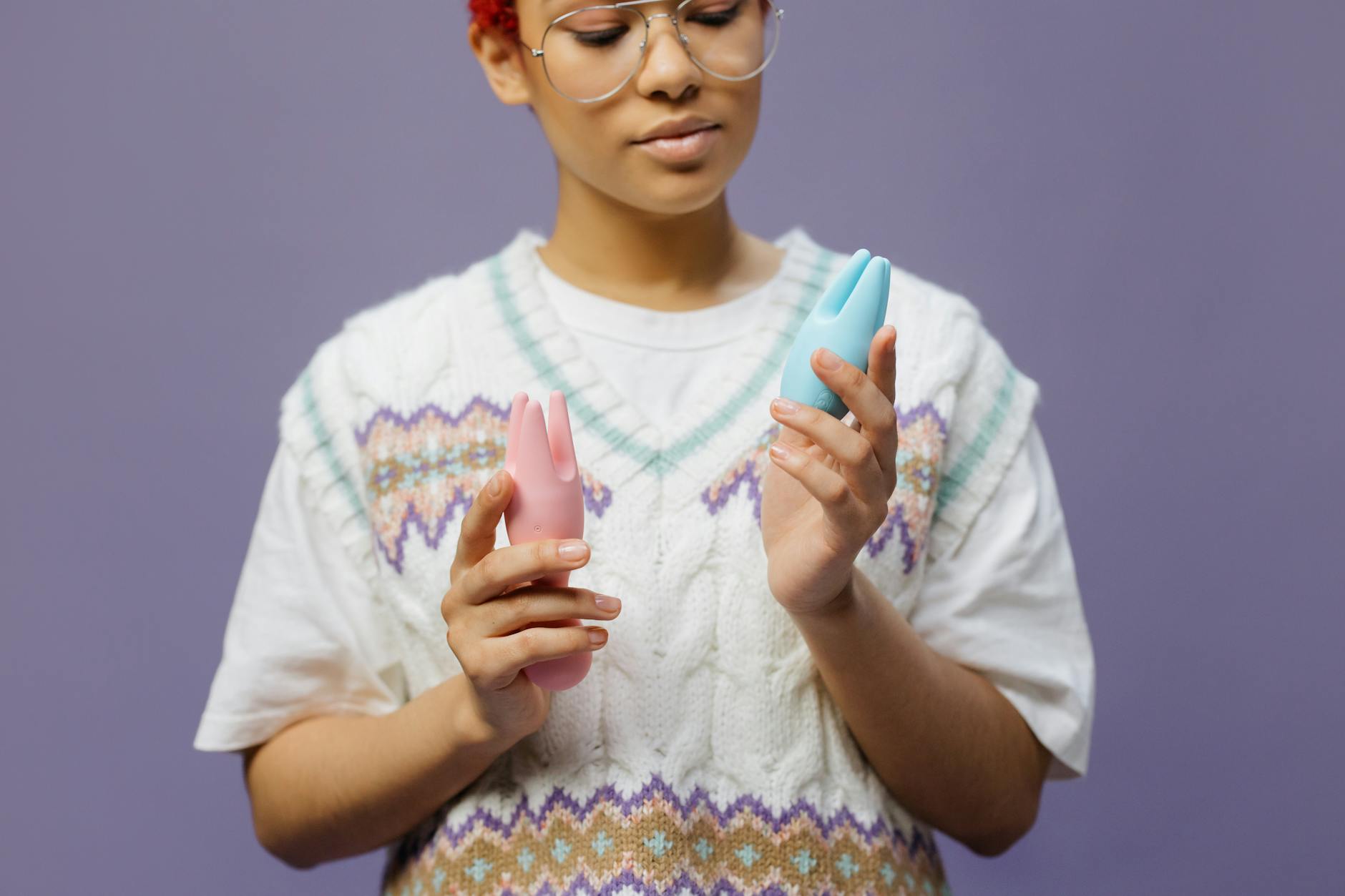
Listen, I'm not going to tell you that introducing a lemon sucker into your sex life automatically fixes communication. It doesn't. But I will tell you what I've seen happen repeatedly in my practice: when someone brings a toy like the Lem into the conversation, they're doing something radical. They're making their pleasure visible. They're saying, out loud, "I want this." And that's the hardest part.
A lemon clitoral vibrator is small, discreet, and powerful. Aesthetically, it doesn't scream anything. It just sits there. Honest. And sometimes, that honesty is contagious.
When your partner sees you reach for it, hold it, ask for space to use it, something shifts. You're not asking for permission anymore. You're stating a fact about yourself. You have needs. They matter. And you're going to honor them.
The practical steps
Start here: tell your partner you want to try something. Not "I want to introduce a toy," but "I want to show you something about what feels good for me." That one word, "show," takes the pressure off explanation.
Use the lem vibrator alone first, several times. Get comfortable with it. Understand your own response. This isn't selfish. This is research.
When you're ready to involve your partner, don't make it a big production. Pull it out during foreplay the way you'd reach for lube. Natural. Expected. The casualness of the gesture teaches your nervous system that this is normal and safe.
What changes when you let yourself ask
I worked with a client once, Sarah, who couldn't orgasm with her partner of eight years. Not because she was incapable. Because she couldn't ask for what she needed. She'd learned early that her needs were a burden.
When she first brought home a lemon vibrator, she was terrified. Her partner would think she was rejecting him. That he wasn't enough. All the catastrophic thoughts.
He didn't. He watched her use it. He asked questions. And then, quietly, he said: "I want you to feel good. I had no idea you were holding back."
That conversation changed everything for them. Not because the toy was magic. Because Sarah finally said, out loud, "I want this," and the world didn't end. In fact, it got bigger.
Your partner isn't a mind reader. And expecting them to be is actually a way of avoiding responsibility for your own pleasure. It's a safe way of saying "if they really loved me, they'd know." But that's not how bodies work. Every person is different. Your pleasure is specific. And you have to tell them.
The fear underneath the silence
Most people don't ask for what they want because they're afraid of three things.
First fear: rejection. What if they say no? What if they think you're weird or demanding. If your partner rejects your pleasure, that's information. And it's painful. But it's better to know it than to spend years contorting yourself around their comfort.
Second fear: obligation. If you ask, does that mean they have to do it? Does pleasure become another task on their list? A lemon clitoral vibrator actually solves this one beautifully. You can show your partner: "This is something I do for me. You don't have to do anything. You can be here or not." That removes the pressure and often invites genuine curiosity.
Third fear: being too much. This one runs deep. Women especially are taught that their desires make them too much. Too loud, too needy, too greedy. So we compress ourselves. A lem vibrator becomes a way of saying: "I refuse to be small anymore. Not aggressively. Just firmly."
Building the ask, step by step
Start micro. Don't lead with "I need us to talk about my pleasure." That's a lot. Start with the toy itself.
"I got something I want to try. Can I show you?" That's it. That's the ask.
Use the lemon vibrator in front of your partner. Let them see your face, your breathing, your response. This is vulnerable and it's also powerful. You're saying: "This is what my pleasure looks like. Watch."
After, tell them what you felt. Not in an educational way. In a real way. "That felt amazing." "I didn't know I could feel that way." Just the truth.
Over time, as they see you asking for this one thing and the world keeps turning, your nervous system starts to believe it's safe to ask for other things. More direct touch. Different positions. More time. These are not unreasonable asks. They're human.
When your partner resists
Some partners will be curious and game. Some will be nervous. Some will be defensive, as if a toy is commentary on their adequacy. If that happens, there's a conversation to have that's bigger than the toy. And you might need help having it.
If asking for your own pleasure causes a partner to withdraw, criticize you, or punish you, that's a relationship problem. Not a toy problem. A lemon vibrator doesn't create those dynamics. It just illuminates them. And illumination is actually useful information, even when it's painful.
Asking for pleasure isn't selfish. It's the foundation of a life that feels like yours.
The deeper pattern
Here's what I notice after twenty years of doing this work. People who can't ask for pleasure also tend to have trouble asking for other things. A raise. A break. Help with housework. The silence around sex is actually a symptom of a bigger pattern: you don't believe your needs are legitimate.
Asking for what you want is not just about the toy. It's about building a life where your voice matters. It's about telling yourself, every single time you ask: "I am worth listening to."
A lemon vibrator can be that first practice ground. It's small enough to feel manageable. Specific enough that there's no ambiguity. And focused enough on your own body that the stakes feel lower than asking for something from your partner.
But the skill you're learning is bigger. You're learning that your pleasure is real and that you deserve to advocate for it.
What happens next
After the Lem, after the conversation, after your partner sees you use it and understands it's not a referendum on them, something opens up. People start asking for other things. More foreplay. Different timing. To be touched a certain way. To say "not today" without guilt.
And their partners, often relieved to finally have a map, start asking too. What do you want. What feels good. The conversation becomes mutual. And that's when sex stops being a thing you do and becomes something you build together.
Practical things that help
If you're scared to ask, write it down first. Not a script, just notes. "I want to feel more." "I want things to be slower." "I want your hands here." Seeing it on paper makes it real and also less likely that you'll disappear into anxiety and say nothing.
Pick a calm moment, not during sex, to start. "Hey, I want to talk about something. No pressure, just want you to know." That framing matters. You're not ambushing. You're inviting.
Start with the toy because it's easier than asking your partner to do something differently. The lemon clitoral vibrator doesn't require them to change. It requires you to show up for yourself. And that's actually the harder part.
Use a lemon adult toy consistently. The more you know your own body and what feels good, the easier it becomes to ask for it. It's not guessing anymore. It's evidence.
When you're really stuck
If you've tried and the fear is still overpowering, or if your partner's response was painful, you might benefit from talking to a therapist. Not because there's anything wrong with you. But because learning to ask for pleasure is a skill, and sometimes we need help rewiring old patterns. I offer phone sessions at /contact if you want to explore this further.
The good news: nobody is born knowing how to ask. We all learn it. And it's never too late to start.
FAQ
How do I bring up a lemon vibrator if my partner is resistant to toys?
Start with honesty about your own body, not about the toy. "I want to explore what feels good for me. I got something to help with that." You're not asking permission. You're giving a heads up. Resistance often softens when partners realize it's not about them. The Lem is something you do for yourself, they just happen to be in the room.
Will using a lemon clitoral vibrator make me not interested in partnered sex?
No. The opposite usually happens. When you actually feel pleasure and know what you want, partnered sex often improves because you're not performing anymore. You're present. That's more interesting, not less.
What if I'm too embarrassed to ask for pleasure, even with a toy?
That embarrassment is data. It's telling you something about what you've learned about your own body and worth. A lemon vibrator won't instantly erase that. But using it consistently, alone, can be really healing. You're literally showing yourself: "I'm allowed to feel good. I deserve this." That changes things.
My partner thinks introducing a vibrator means they're not enough. How do I fix that?
You can't fix his insecurity for him. But you can be clear: "This isn't about you. This is about me knowing my own body. Don't you want to know what actually makes me feel good?" Sometimes curiosity redirects defensiveness. If it doesn't, and his insecurity prevents you from exploring your own pleasure, that's a relationship problem worth examining.
Is it easier to ask for what I want if I've already explored with a lemon sucker alone?
Yes. Absolutely. When you've felt the intensity of the Lem, when you know exactly what sensation you're reaching for, asking becomes less vague and more confident. "I want that kind of focused stimulation," is clearer than "I don't know, just try something." Specificity invites cooperation.
How long before I feel comfortable asking my partner directly without a toy?
That varies. Some people move to direct requests within weeks. Others take months. The toy isn't forever. It's a training ground. Once your nervous system believes asking is safe, you can ask for anything. The lemon vibrator is just the first word in a much longer conversation.
The last thing
You deserve to feel good. Not in some abstract future where you finally get permission. Now. While you're still here. That feeling of asking for something you want and having it honored is not selfish. It's the foundation of a life that feels like yours, not like a life you're performing.
A lemon clitoral vibrator won't change your relationship. But asking for one might. Because asking is where everything starts. And you've been quiet long enough.
If you're ready to have the conversation but need a little support thinking through it, we're here at /contact. Or start small, alone, with a Lem, and let your own pleasure teach you that you're worth listening to.