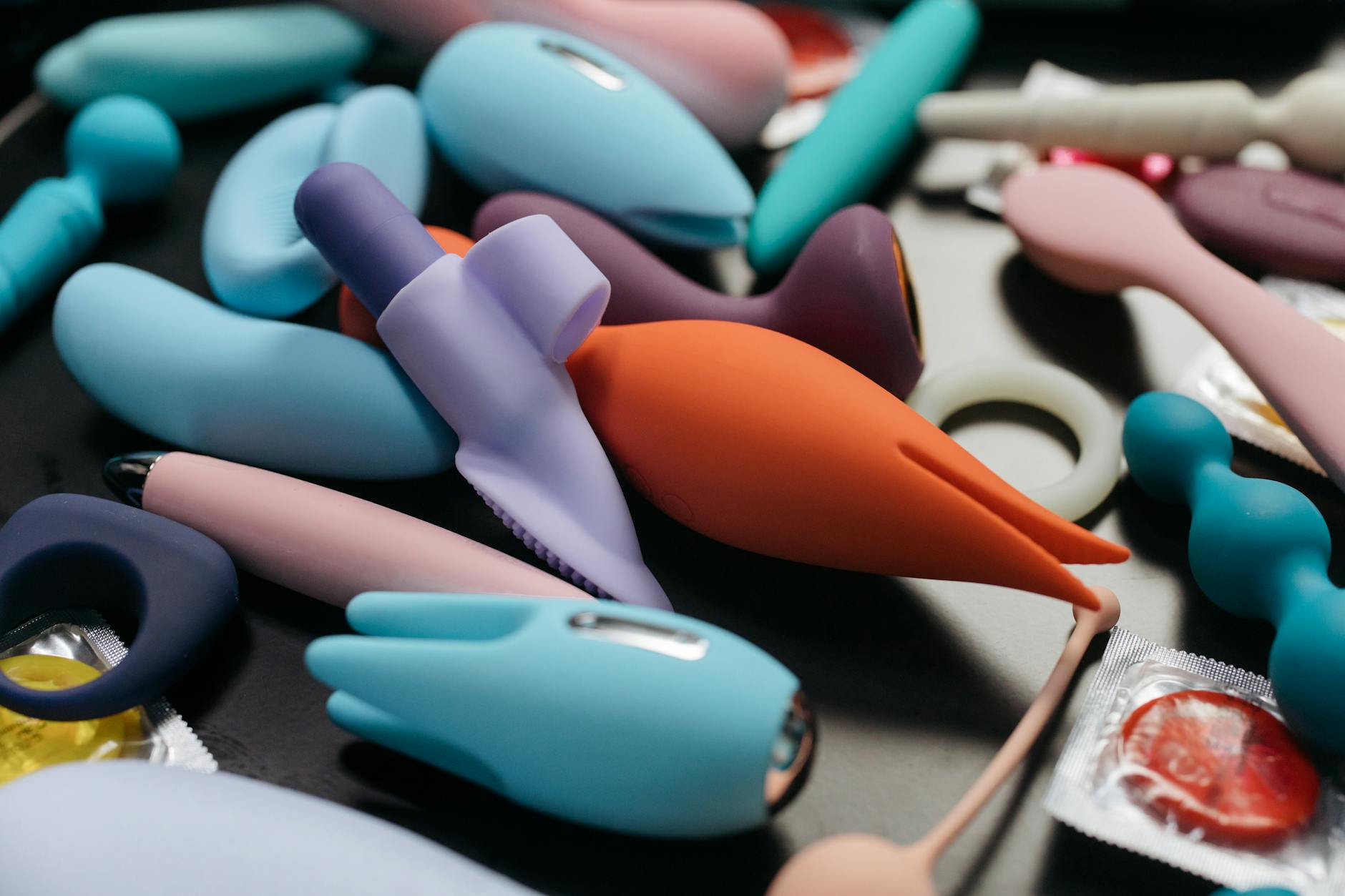
Here's the thing about intensity and control
Most people think a vibrator is a vibrator. You turn it on, it vibrates, you either like it or you don't. But here's what actually matters: the difference between a tool that does one thing and a tool that lets you decide what it does. Lemon vibrators, especially the suction-based ones, give you precision control that most vibrators can't touch.
The better your control, the longer you can play, the easier it is to find exactly what your body wants in that moment, and the less likely you are to overstimulate and lose sensation halfway through. Control isn't boring. Control is freedom.
Why intensity matters more than you think
Too much intensity too fast is the number one reason people feel numb mid-session. Your nerve endings get fatigued. The sensation flattens. You're chasing a feeling that's already gone.
Too little intensity means you're working harder than you should, building frustration instead of arousal. The sweet spot is different for everyone, and it changes. It depends on where you are in your cycle, what you've been stressed about that week, how long it's been since the last time, what kind of stimulation you're craving.
The vibrators that give you the most control let you start low and actually feel what's happening instead of bracing for impact.
The lemon vibrator intensity landscape
Most lemon clitoral vibrators have between 3 and 9 intensity settings. This sounds like a lot until you realize that jumping from level 1 to level 2 might feel like nothing, and level 2 to level 3 might feel like doubling the power. Not all settings are created equal.
With lemon vibrators, especially the lemon sucker style, you're not just dealing with intensity. You're dealing with the pattern of the suction, the rhythm, the pressure. A single setting can feel entirely different depending on whether you're using it for 10 seconds or 2 minutes.
Start with the understanding that every setting is a doorway, not a destination. You're looking for the one that keeps you interested without frying your nerves.
How to actually find your intensity baseline
Sit down when you're not aroused. Turn the vibrator to level 1. Hold it against your inner arm (not your clitoris, not yet). This is calibration. What does level 1 feel like when there's no stakes, no pressure to perform, no expectation?
Move to level 2. Then 3. Then 4. You're mapping the device, not seeking sensation. This takes maybe two minutes and it changes everything because now you know your device's personality before your body's involved.
Next session, when you're actually aroused and ready, start where you think you want to be based on your mapping. Probably not level 1. Probably somewhere in the 2 to 4 range for most people, depending on the device.
The key move: once you turn it on at your starting level, give it 30 to 60 seconds before you adjust. Your body's response isn't instant. Sensitivity builds. A setting that feels shy at first often feels just right after a minute.
The stepping-up technique for longer sessions
If you want to extend pleasure without flatlining, never stay on the same setting for more than 3 to 5 minutes. I know that sounds short. It's not.
Here's the pattern: start at level 2 or 3, stay there for 3 minutes. Move to level 4, stay for 2 minutes. Move to level 5, stay for 90 seconds. Then back down to 4. Then to 6 (a new height). Then back to 3. You're creating a rhythm that keeps your nerves waking up instead of going dormant.
This isn't about chasing an orgasm. This is about building arousal in a way that actually sustains. Most people who feel numb halfway through are too focused on intensity and not focused enough on variation.
Why tempo matters as much as power
Lemon vibrators often have different patterns, not just intensity levels. A pulsing pattern at level 5 might feel gentler than a steady vibration at level 4. The human body doesn't register power in a straight line.
If your lemon clitoral vibrator has pattern options, start exploring them at the same intensity level. Notice which pattern your body leans into. Usually it's not the strongest one. It's the one that feels like it's matched to your nervous system's rhythm that day.
Switching between patterns is another way to reset fatigue without actually turning the device off. You get to stay in flow while your nerves reset.
The pressure play angle
Here's something most people miss: with lemon suction-style vibrators, how hard you press against your body IS intensity control. You don't have to rely only on the device's settings.
Light pressure with a higher setting can feel less intense than firm pressure on a lower setting. If you want to dial things down, pull back slightly. If you want more, press in. This gives you infinitely granular control within each level.
Practice this. Hover the vibrator barely touching your skin at level 4. Notice what that feels like. Now press in firmly at level 2. These might feel similar or wildly different depending on the pattern. You're adding a second dimension of control that makes lemon vibrators so effective.
When to ignore intensity entirely and focus on time
Some days intensity isn't the problem. Consistency is. Maybe you need the same exact sensation for 10 minutes straight, not variation.
On those days, find your level (often a medium setting, 4 to 6), press play, and don't touch anything. Let your body build at its own pace. Intensity control isn't always about dialing up and down. Sometimes it's about the discipline to not overcomplicate it.
If you're using a lemon vibrator for longer sessions with a partner, consistency also helps them stay engaged without feeling like they need to manage the remote. You're in control, which means they can focus on other kinds of contact and presence.
The overstimulation recovery move
Say you've pushed into level 6 or 7 and your clitoris has gone numb or hypersensitive (too intense, can't touch it). This is recoverable.
Turn the device completely off. Take your hands away. Wait 30 seconds to 2 minutes depending on how overcooked you feel. Then come back at level 1 or 2 with very light pressure. Start fresh. Your sensitivity will come back, usually within a minute.
You haven't failed. You've just found the ceiling and now you know where it is. Next time you can approach it more carefully. This is data, not disappointment.
Tracking what actually works
Your body's intensity preferences aren't static. They shift month to month, week to week, sometimes day to day. If you care about this, keep a simple note: the date, what intensity level you started with, what you ended with, how you felt.
After three or four weeks you'll see a pattern. Maybe you always hit your sweet spot around level 4 or 5 early in your cycle and dip to 2 or 3 around ovulation. Maybe stress tanks your tolerance. Maybe certain times of day you want more and other times you want less.
This isn't obsessive. This is you getting smarter about your own pleasure, which means less guessing and more actual sensation.
How The Lemon Clit products approach intensity control
The design of lemon clitoral vibrators like the Lem puts intensity in your hands in ways other toys don't. The suction-based stimulation means you're not hammering your clitoris with vibration; you're creating a sensation that builds. Combined with multiple intensity levels and patterns, you have serious precision.
If you're just starting with lemon vibrators or you want to explore intensity control more deeply, spend time mapping your device the way I described earlier. Most people skip this step and go straight to session mode. The ones who don't end up with way more control and way more pleasure.
People also ask
Why does my lemon vibrator feel less intense than it did last time?
Your clitoris adapts. Sustained stimulation at the same intensity causes temporary desensitization, which is completely normal. The fix is simple: take a break (even just 10 seconds), drop the intensity for a minute to reset, or switch patterns. Your sensitivity bounces back quickly once you change the stimulus.
Can I damage my clitoris by using high intensity levels?
No, but you can overstimulate it temporarily, which feels worse than damage. Overstimulation causes numbness or soreness that lasts hours, not days. If you hit that wall, rest and come back at a lower level. Your body's got better feedback than you think. Listen to it.
Is it normal to need a higher intensity over time?
It's normal to need different intensities at different times. If you're noticing a consistent upward creep, the most likely reason is that you're not giving yourself enough variation between sessions. Try spacing sessions further apart or switching patterns for a few weeks. Adaptation is real but it's reversible.
Should I use the highest setting right away or start low?
Start at a medium-low setting (2 to 4 depending on the device) when you're already aroused. Jumping to high intensity before your body is ready feels jarring and can backfire. Let sensation build. You can always go higher. You can't un-ring that bell if you started too intense.
What if my partner wants more intensity than I do?
If you're using a lemon vibrator together, remember that intensity is individual. What feels perfect for them might feel overwhelming for you. The compromise is often settling on a medium setting (4 to 6) and letting the person receiving it control pressure and placement. Or take turns, each of you finding your own sweet spot when it's your turn. No one's pleasure is a negotiation.
Can I use intensity settings to last longer during partnered sex?
Absolutely. Lower intensity (2 to 4) over a longer time period gets you aroused without the buildup that leads to fast orgasms. You can also use the stepping pattern I described earlier: build gradually, plateau, ease off, build again. This extends arousal and gives you more control over timing.