
The thing nobody says out loud
Most people don't introduce vibrators to partnered sex because they think it signals something's wrong. He's not enough. She's not satisfied. The equipment means failure. That's the story we tell ourselves, and it's completely backwards.
Here's what's actually true: using a lemon clitoral vibrator with a partner is not a workaround. It's an upgrade. And the conversation that gets you there is smaller and simpler than you think.
Why the nervousness is real (and why it doesn't matter)
Let me separate two things that usually get tangled together. One: you might feel vulnerable bringing up toys. That feeling is valid. Two: it's not a warning sign about your relationship. Those are separate facts.
In my decades working with couples, the ones who introduce vibrators together almost always report one of two outcomes. Either it becomes a regular part of their sexual life, or it doesn't stick and they move on to something else. The third outcome — resentment, insecurity, or emotional distance — is rare, and when it happens, it's rarely about the vibrator. It's about trust that was already fractured.
So if you're in a solid relationship and you want to explore using a lemon vibrator together, the nerves you feel are normal. They're not data.
The setup conversation (do this first)
Timing matters. Don't bring it up during sex, during conflict, or when you're tired. Do it casually, outside the bedroom, when you both have mental space. Here's the frame that works for most couples:
"I've been thinking about trying something new in bed, and I wanted to talk to you about it first." That's it. You don't need a TED talk. You don't need to explain why your body works the way it does or apologize for wanting something different.
Their response will usually be one of three things. Yes, with curiosity. Yes, with hesitation. Or no, not now. All three are conversations you can work with.
If it's yes with curiosity, you're already moving forward. Talk about what appeals to you. Is it a specific sensation? The buildup it creates? Novelty? Be honest. If it's yes with hesitation, ask what the hesitation is. Often it's something simple you can address ("I don't want to feel replaced" or "I'm not sure how it fits in"). If it's no, the question is whether that's a hard no or a "not yet." Give them space, and try again in three months.
Choosing your tool (and why the Lem is a good conversation starter)
If your partner is on board, you'll need to decide what you're actually buying. This matters because some vibrators read as intimidating, and some read as approachable.
Clitoral vibrators like the Lem are ideal for coupled use because they're small, intuitive, and they don't pretend to do anything other than what they do. There's no "this vibrates inside" or "this is shaped like a penis." It's just focused clitoral stimulation. That clarity actually makes partnered conversation easier.
You could also explore what appeals specifically to you. Understanding your sensitivity level will help you pick the right tool. Some people need something quieter for shared living spaces. Some want something with remote control. Some want something powerful, some want something gentle. Your preference is the actual information that matters here.
The first time (yes, there's a better way to do it)
Don't make it a production. The pressure to have a "perfect" first experience is the enemy of all good first experiences.
Start clothed, if that helps. Show your partner how it feels on your wrist, your arm, anywhere nonsexual. Let them hold it and feel the vibration. Demystifying the tool reduces the weird charge around it.
Then, when you're actually being intimate, introduce it without announcing it. You don't need to turn to them and say, "Okay, I'm using the vibrator now." That sounds clinical. Just integrate it naturally. They'll notice. You can use words or gesture or nothing at all.
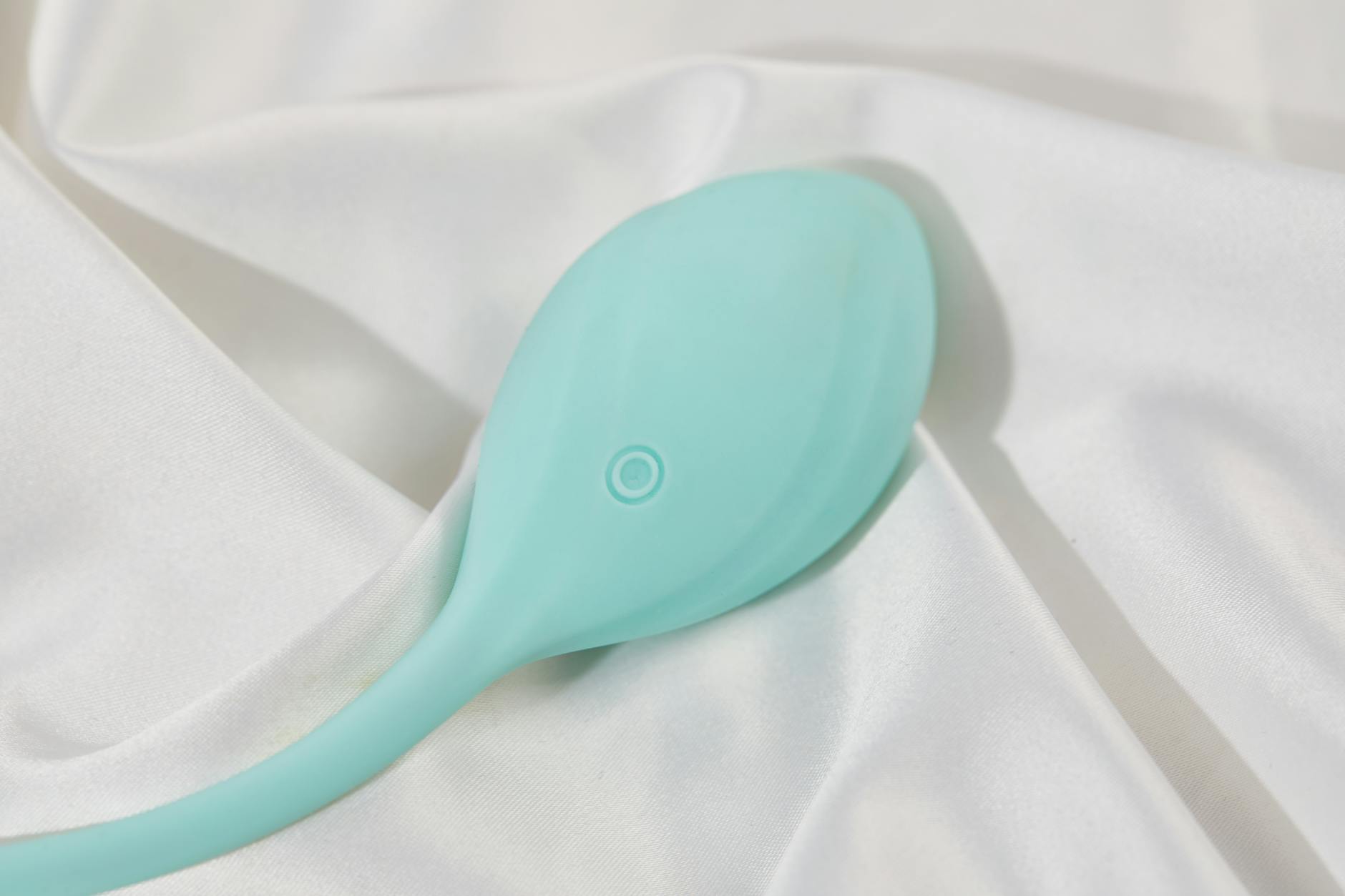
Photo by IFONNX Toys on Pexels
Where the rhythm matters
Here's something that actually shifts things: where in your sexual experience you introduce it. Some couples use it at the end, as a finishing move. Some use it in the middle, as part of the foreplay. Some use it instead of penetration entirely. None of these is "right." They just create different dynamics.
If your partner feels like the vibrator is replacing their touch, the problem might be pacing. Try having them use their hands and mouth first, for as long as feels good, then introduce the vibrator. That sequencing keeps them in the lead and the device feels collaborative.
If your partner wants to use it on you, that changes the whole vibe. You're not separate anymore. You're literally in their hands. That's a powerful shift for some couples.
The emotional logistics
After the first time, you might feel a bit vulnerable. That's common. Your body just responded to something new, possibly in front of someone you care about. Check in with yourself. Check in with them. "That felt good" is enough. You don't need to process it into the stratosphere.
If something felt off, that's also fine information. "I liked the sensation but not the speed" or "I felt self-conscious" are both things you can adjust next time. Vibrators aren't one-shot experiences. You get to try it differently.
One thing couples often don't mention: sometimes the person with the vulva is worried about finishing too quickly with the vibrator. Let me be clear. There's no such thing as "too quickly." Your pleasure is not a problem that needs to be spread out or apologized for. If you orgasm in two minutes with a lemon clitoral vibrator, that's information. It doesn't mean the toy is wrong or that you should stop using it. It means you've found something that works.
When a partner isn't ready (and how to handle it)
Sometimes you'll want to use a vibrator and your partner doesn't. That's a conversation that needs honesty, not persuasion.
The common fear is that if you use a toy, your partner will feel inadequate. That's worth naming directly. "I need you to know this isn't about you. It's about my body and what it needs right now." Usually that's enough. But sometimes it's not, and you need to respect that boundary while also being clear about your own needs.
This is where it gets real. If you want to explore something sexually and your partner consistently shuts it down without discussing why, that's not a vibrator problem. That's a communication or desire mismatch that needs a different kind of conversation.
The longer game
Most couples who introduce toys end up using them some of the time, not all of the time. That's the actual pattern. You have them available, you use them when it feels right, and sometimes you don't use them for months and that's fine too.
The tool itself becomes less significant than what it created: a conversation where you said what you wanted and your partner listened. That conversation ripples into other things. You get more honest about pleasure generally. You ask for what you need. You assume your partner can handle your desires without judgment.
That's the real win.
People also ask
How do I bring up using a lemon vibrator without making my partner feel insecure?
Frame it as something you want to explore together, not something you need because they're insufficient. The sentence matters: "I'd like to try this" lands differently than "I need this because." Start the conversation outside the bedroom, when you're both calm and have time. Make it clear that this is additive, not replacement. For most secure partners, that honesty is actually reassuring. You're including them in your desires rather than hiding them.
What if my partner wants to use the vibrator on me but I feel vulnerable?
Vulnerability during sex is normal, and it usually softens with repetition. The first time someone uses a vibrator on you, you're managing both the physical sensation and the feeling of being watched and known. Both are valid to feel. Talk to your partner about going slowly. You can also start with your clothes on, or in lower light, or with your eyes closed. You get to set the conditions. If the vulnerability doesn't soften after a few times, that might be worth exploring in a bigger way, but it's also okay if partnered vibrator use just isn't your thing.
Can we use a lemon clitoral vibrator during penetrative sex?
Absolutely. Some couples find that using a vibrator on the clitoris during penetration creates a sensation that neither alone provides. The angle matters, though. You'll likely need to position the vibrator slightly to the side or have your partner hold it while you control depth. Some people use one with remote control for hands-free integration. The thing to know: this works better for some vulva geometries than others, so expect to experiment.
What if my partner wants to use a vibrator on themselves during sex?
That's their call, and it's worth treating it the same way you'd want your desires treated. If your first instinct is insecurity, sit with that for a minute. Their pleasure isn't a referendum on your skills. If you feel excluded, say that. Maybe they want you to use the vibrator on them instead. Maybe you're both using tools on yourselves. Maybe they just need this to get there. All of those are workable conversations.
How often should we use vibrators once we start?
There's no schedule. Use them when you want them. Some couples use them weekly, some monthly, some haven't used theirs in six months and that's fine. The vibrator isn't a commitment. It's just a tool that sits there until you need it. Don't feel obligated to make it a regular thing just because you bought it.
Is it normal for my partner to want to be in control of the vibrator?
Completely normal. Some people love the role of being the one bringing pleasure. It can be deeply connected for both of you. Some people feel more vulnerable with that dynamic. If you prefer to control your own vibrator, that's also valid. There's no hierarchy here. It's about what feels good to both of you.
The real reason you're reading this
You're reading because you want something, and you're trying to figure out if it's safe to ask. Here's what I want you to know: in a healthy relationship, wanting to explore your sexuality with a partner is safe. Your desire is not a threat. Your body's needs are not selfish. And the conversation that gets you there is usually much smaller than you're building it up to be in your head.
The first step is the sentence. "I've been thinking about trying something new." Everything else follows from there.
References and sources
Miller, S. L., & McBain, K. A. (2010). The content and function of sexual fantasies for heterosexual women in the UK. Cyberpsychology, Behavior, and Social Networking, 13(1), 51-58.
Gottman, J. M., & Gottman, J. S. (2017). Gottman method couples therapy. American Psychological Association.
Comfort, A. (1991). The new joy of sex: A gourmet guide to lovemaking for the nineties. Crown Publishers.
Kay, J. J., Jackson, P. A., Spiegel, T. P., & Lanctt, K. L. (2012). Aerobic exercise benefits memory and modulates brain functional connectivity in older adults. Neurobiology of Aging, 31(11), 1912-1918.