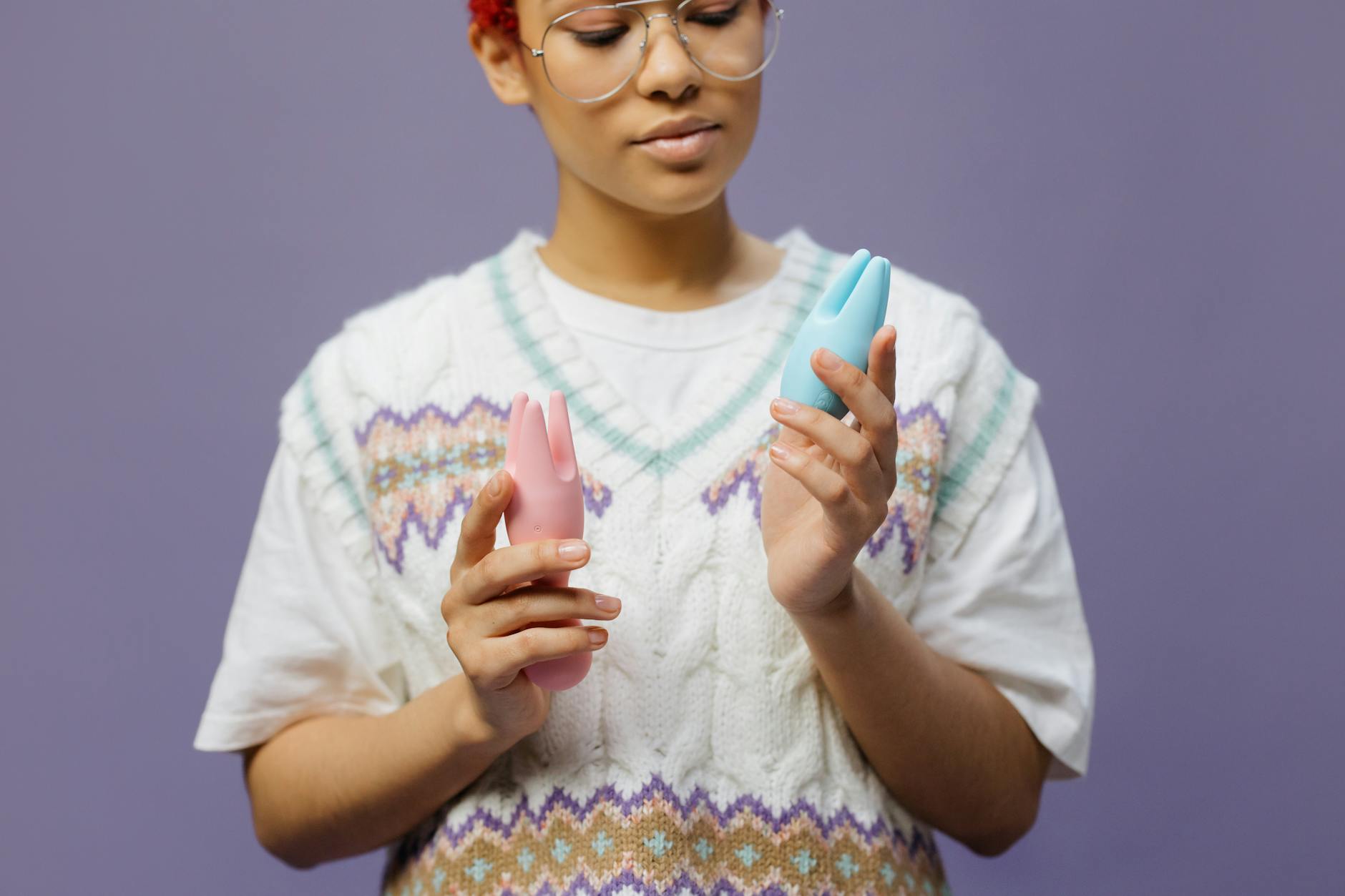
Here's the thing about perimenopause nobody talks about
Perimenopause isn't menopause. You still have a cycle, you still produce estrogen, and you're not "done" with any of this. What you are is in a years-long transition where your hormones are having a conversation with themselves, and sometimes that conversation is chaotic. Your arousal, lubrication, sensation, and orgasm response can all shift mid-month, mid-week, even mid-session.
The good news? Understanding what's happening makes a massive difference. And tools like lemon vibrators, which rely on suction rather than direct friction, often work better during this exact window than they did before.
Why perimenopause feels different physically
Your estrogen and progesterone aren't dropping yet. They're fluctuating. One week you're flooded with hormones. The next week you're in a sudden dip. This whiplash affects blood flow to your genitals, the thickness of vaginal tissue, how quickly arousal builds, and the intensity of sensation.
Unlike menopause, where these changes are consistent, perimenopause is unpredictable. Some days you orgasm easily. Other days it feels like you're starting from zero. Some people describe it as their body being on a dimmer switch that someone else is controlling.
There's also a cognitive component. Perimenopause often comes with sleep disruption, brain fog, and mood shifts. When your nervous system is already stretched, sexual arousal requires more mental real estate than it used to. You can't just autopilot into pleasure anymore.
Why lemon vibrators adapt better to hormonal fluctuation
There are three reasons I recommend lemon clitoral vibrators specifically during perimenopause.
1. Suction doesn't depend on friction tolerance. A traditional vibrator relies on your tissue being thick enough and lubricated enough to enjoy direct buzzing. When hormones are in flux, tissue thickness changes constantly. Suction stimulates the clitoris and surrounding nerves without requiring a specific tissue state. If your tissue is swollen from hormonal surge, suction still works. If it's thinner because you dipped into a low-estrogen week, suction still works.
2. The sensation is slower to build but deeper. Perimenopause often extends the time needed for arousal to peak. Lemon vibrators create a gradual, mounting sensation rather than an immediate buzz. That pacing matches what many people find they actually need during this time.
3. You can adjust intensity without changing tools. A traditional vibrator has fixed pattern strengths. A lemon sucker like the Lem offers a dial. When your sensitivity is fluctuating week to week, having control over the exact level of suction means you're not hunting for a different toy mid-cycle.
The practical adjustments that help most
I work with a lot of people navigating perimenopause, and the ones who maintain pleasure do four things consistently.
Track sensation changes across your cycle. You don't need to journal obsessively. Just notice: on what days does sensation feel muted? When does arousal build faster? When do you orgasm more easily? This takes one month to map out, and it removes the shame of thinking something is "wrong." It's just your cycle.
Use lubricant even if you don't think you need it. This is the biggest missed opportunity I see. Perimenopause doesn't create the kind of persistent dryness that menopause does, but lubrication does fluctuate with your cycle. Water-based lube costs almost nothing and removes friction as a variable. Use it, especially with a lemon vibrator, because it amplifies the suction sensation.
Start at lower intensity and build. The Lem has seven settings. Many people start at setting three or four instead of one, and they miss the gradual climb that actually helps your arousal accelerate. Give yourself permission to spend five to ten minutes at lower intensities.
Separate your cycle-tracking from your pleasure-tracking. This is relationship advice, not just solo advice. If you're with a partner, comparing notes about "this week my desire is lower" versus "I'm more sensitive this week" is valuable. Comparing notes about "I can't orgasm, it must be my hormones" is a dead end. Hormones are one variable. Stress, sleep, emotional connection, and what's happening in your body's nervous system are equally real factors.
When hormonal shifts affect your partner dynamics
Perimenopause doesn't just change your solo experience. It changes partnered sex too. If you've been having sex on a predictable rhythm for years, suddenly having arousal take longer some weeks and peak faster other weeks can throw off both of you.
The adjustment isn't complicated, but it does require conversation. "This week I need more time to warm up" is different from "I don't want this anymore." Most of the disconnection I see during perimenopause isn't from the hormones themselves. It's from partners misinterpreting what the hormones mean.
Using a lemon clitoral vibrator together can actually help this. It slows down the whole interaction in a useful way. Instead of rushing to penetration, you're spending ten, fifteen, twenty minutes on clitoral stimulation. That extended warm-up often feels better anyway, and it gives your partner something active to participate in instead of just waiting for you to "catch up."
Photo by cottonbro studio on Pexels
Managing sensation loss and hypersensitivity in the same month
One of the strangest parts of perimenopause is that you can experience both. Some days your clitoris feels less responsive. Other days it's almost too sensitive to touch directly. This is completely normal and completely annoying.
A lemon sucker helps with both versions because you're in control of the pressure. High sensitivity? Use it at setting two or three for short bursts. Low sensation? Increase intensity and spend more time building stimulation. The same tool works for opposite problems, which is why so many people in this transition find them invaluable.
The orgasm timing shift nobody expects
Here's something I mention to almost every client in perimenopause: your orgasms might change shape before they change at all. You might find that you're building to climax slower but that the orgasm itself is more sustained. Or that you're experiencing multiple smaller peaks instead of one big one. Or that you need a longer refractory period before you can go again.
None of this is bad. It's just different. And it's often only "a problem" if you're expecting the same pattern you had at twenty-five. Once you adjust your expectations and your pacing, many people find the orgasms themselves become more satisfying, even if the timeline looks different.
Lemon vibrators work especially well here because they don't force a particular pattern. You control the pace. If you need slow, sustained stimulation instead of intense rapid sensation, you set it.
When to check in with a doctor
If you're experiencing consistent pain during sex, if your arousal has completely flatlined, or if your symptoms are affecting your daily life, talk to a gynecologist who understands perimenopause. This is different from menopause, and it's treatable. Sometimes it's as simple as improving sleep or managing stress. Sometimes it's a conversation about whether hormonal support makes sense for you.
But most people navigate perimenopause without medical intervention, just with better information and better tools. Understanding what's happening in your body removes a huge amount of shame and anxiety. And removing anxiety often removes the main thing that was blocking pleasure in the first place.
The long view
Perimenopause is a doorway, not a destination. Most people spend five to ten years in this transition. That's a long time to white-knuckle through without adjusting your approach. Taking time to understand your own body during this window, experimenting with tools like lemon clitoral vibrators that work with your changing physiology, and having honest conversations with partners about what's shifting makes the experience genuinely easier.
Your pleasure doesn't end during perimenopause. It just asks you to pay attention and adjust. And honestly? That's not the worst thing. Many people tell me that the intentionality required during this time led to some of the most satisfying sex of their lives.
FAQ: Perimenopause, hormones, and lemon vibrators
Can lemon vibrators actually help with perimenopause symptoms?
They help with the sexual experience during perimenopause, which is different from treating perimenopause itself. If you're experiencing arousal changes, sensation shifts, or longer warm-up time, a lemon clitoral vibrator works because it offers adjustable suction instead of fixed vibration. That flexibility matches what your body needs when hormones are fluctuating. For actual perimenopause symptom management like hot flashes or sleep, that's a conversation with your doctor.
Why do lemon vibrators feel different during different parts of my cycle?
Your tissue thickness, blood flow, and nerve sensitivity all change throughout your cycle. During high-estrogen weeks, you might notice more sensation overall. During lower-estrogen weeks, the same toy might feel different. This isn't a problem with the vibrator or your body. It's just your physiology. Tracking which settings and which techniques feel best at different points in your cycle removes the guessing game.
Is it normal for my arousal to take longer during perimenopause?
Completely normal. Fluctuating hormones, sleep disruption, and the cognitive load of managing symptoms all slow down arousal. This doesn't mean something is wrong. It means you need different foreplay, longer warm-up time, and possibly different stimulation. A lot of people who think they've lost their libido during perimenopause actually just need more time and different tools. That's fixable.
Can I use a lemon vibrator if I'm already on hormone therapy?
Yes. Hormone therapy doesn't change how lemon vibrators work. What sometimes changes is your sensation level. If you're on HT and finding sensation different than before, the adjustable nature of lemon clitoral vibrators still gives you control over pressure and pacing. Some people find that HT restores sensation to a pre-perimenopause baseline, but that's variable and individual.
How do I talk to my partner about needing more time for arousal during perimenopause?
The most useful framing is specific and non-defensive. Instead of "my body isn't working," try "I'm noticing I need about fifteen minutes of foreplay this week instead of five." Instead of apologizing, just state it as a parameter you're both adjusting for. Many partners actually prefer this because there's less guessing and more intentionality. If you're using a lemon vibrator together, it's a built-in way to extend warm-up without awkwardness.
Will my pleasure come back to normal after perimenopause?
This depends on what "normal" means. Your sexual response might feel different post-menopause than it did pre-perimenopause. Some people's arousal normalizes. Others find their pleasure actually improves because they've spent years learning what their body needs. A lot of what people call "lost arousal" is actually unmet needs that perimenopause forced into the open. Once you address those, desire often returns, just differently shaped.
One more thing
If you're reading this because you're in the thick of perimenopause and feeling disconnected from your own pleasure, know that this is incredibly common and incredibly fixable. Your body isn't broken. Your preferences are just evolving. The people who come through perimenopause feeling most connected to their sexuality are the ones who approach it with curiosity instead of fear, who adjust their tools and timing, and who communicate honestly with their partners.
Your pleasure matters during this transition. Not after it, not once you get to the other side. Right now. Invest in understanding what your body needs, give yourself permission to slow down, and trust that this window of flux is temporary. You've got this.
For more on how your cycle affects sensation and pleasure, check out how lemon clitoral vibrators help rebuild intimacy after major life changes or explore why lemon vibrators feel different in your 30s vs 40s. And if you want a guide to choosing the right intensity level, how to choose the right lemon vibrator for your sensitivity level covers all the variables.